This project (2020-1-PL-KA202-082075) has been funded with support from the European Commission. This web site reflects the views only of the author, and the Commission cannot be held responsible for any use which may be made of the information contained therein.
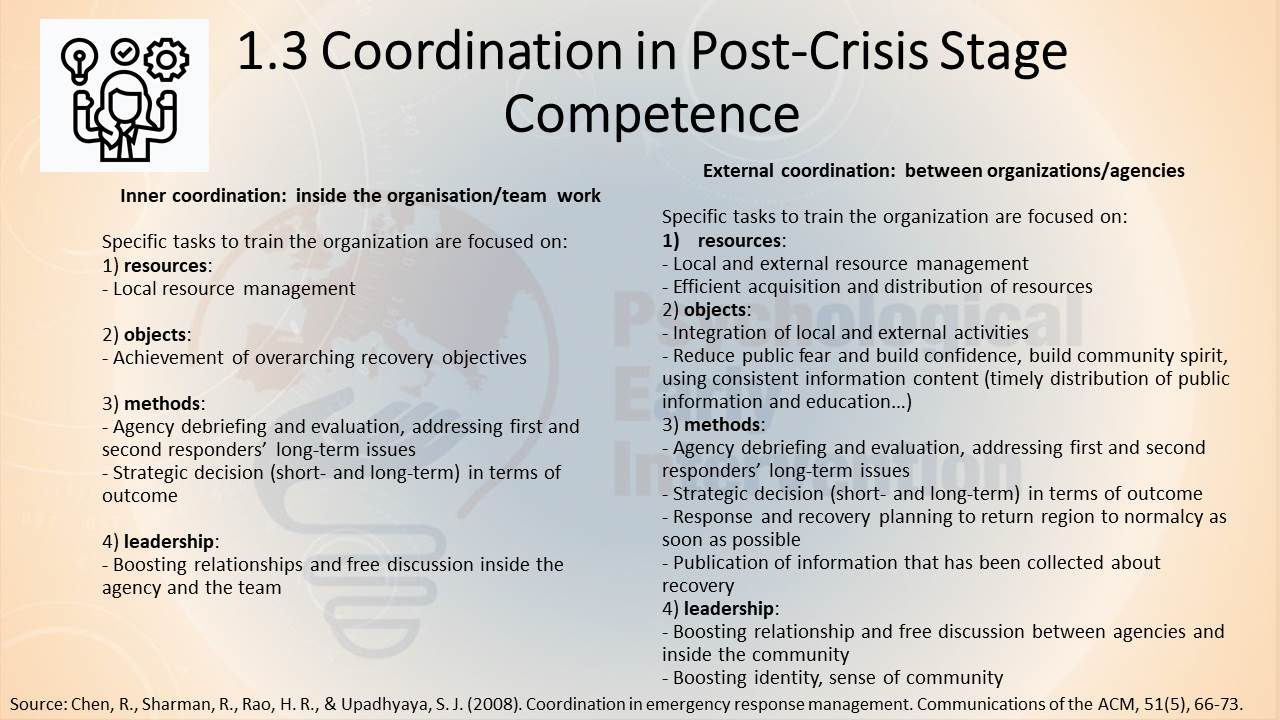
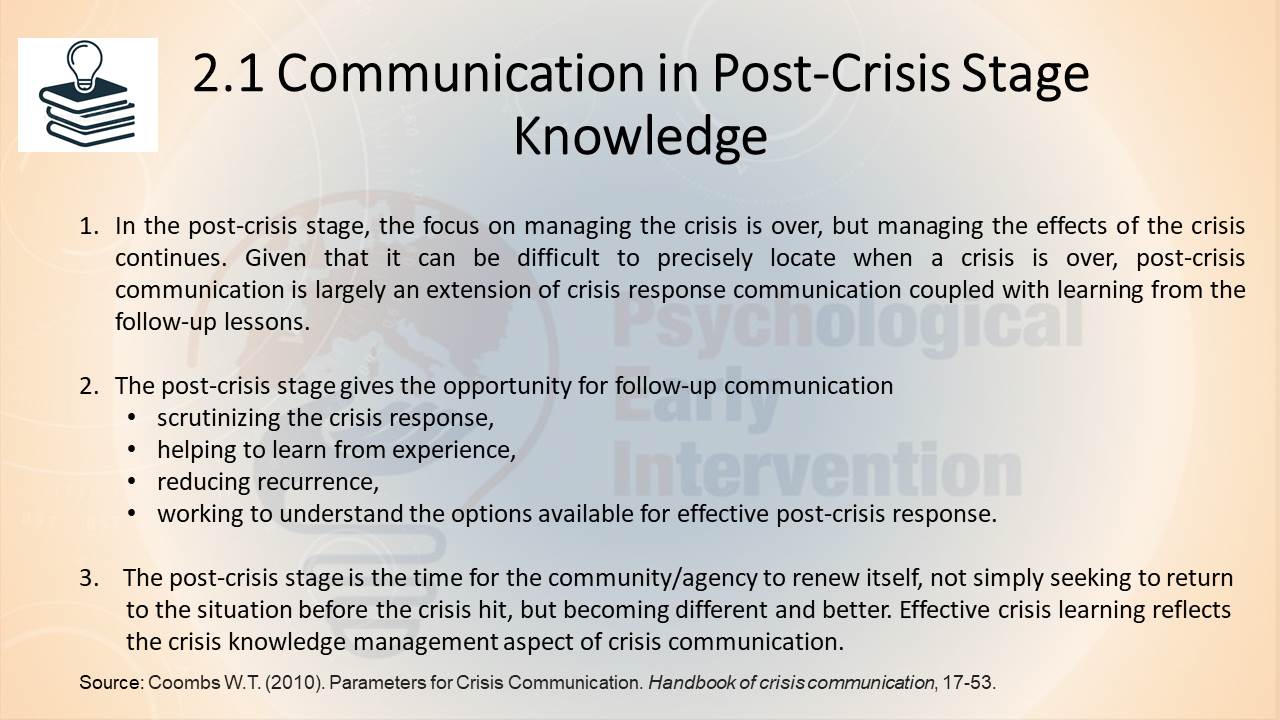
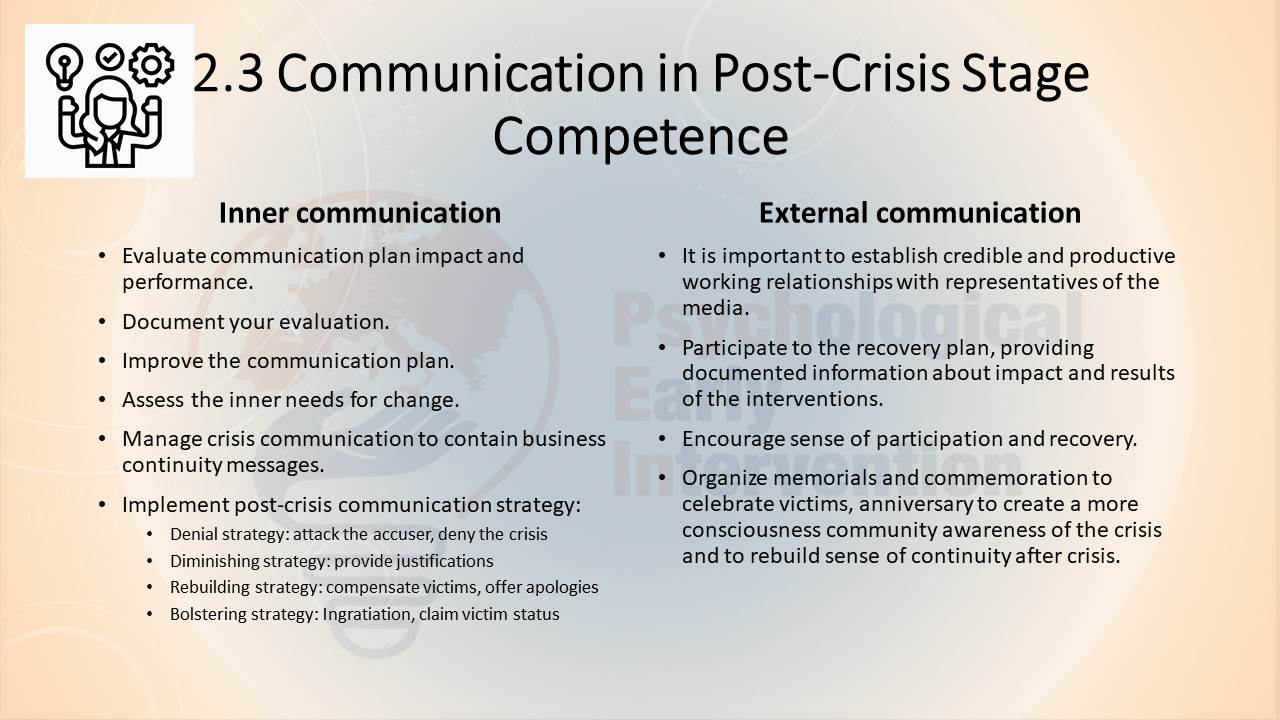
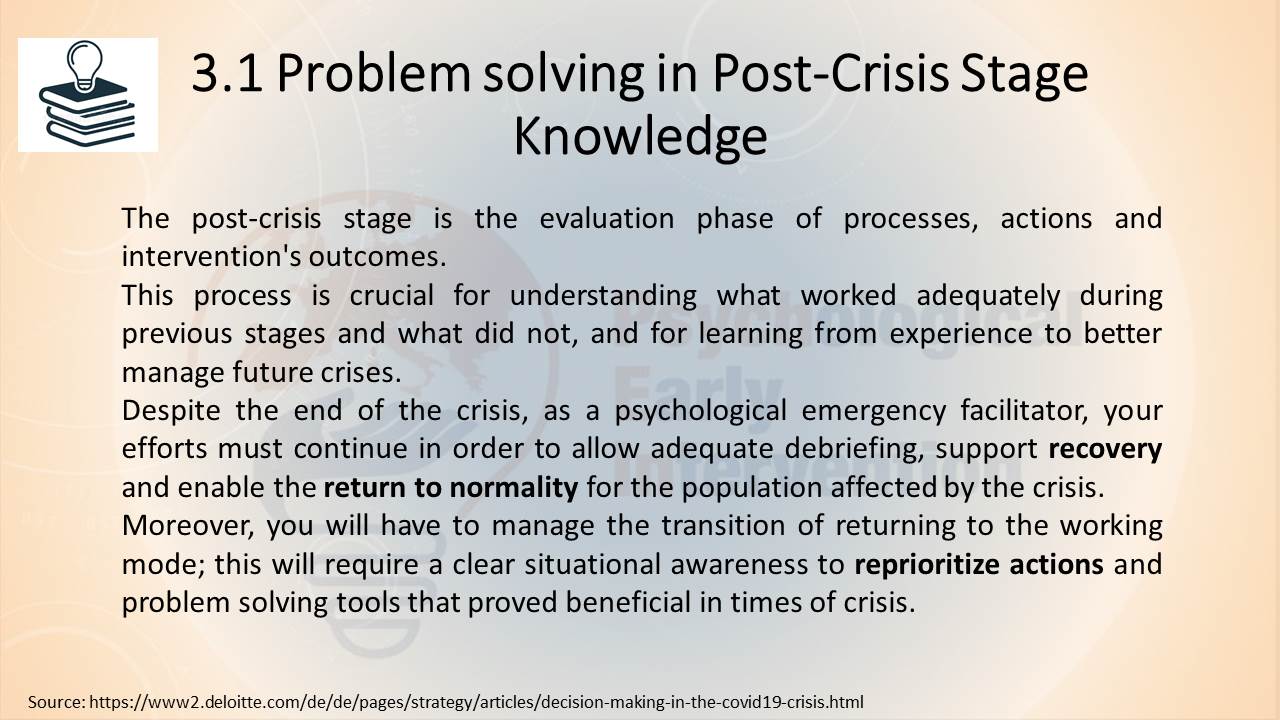
The Post-Crisis Stage is the crucial phase to maintain a sense of continuity after the critical event. Individual and community recovery is the key to improve economy, health and mental health. Recovery focuses on the return of the impacted community to normal life. It is also named “follow-up phase”: it is crucial for debriefing and for learning from experience, in order to deal better with future crises.
CONTENT
Chapter 3.pdf
TIPS
Tip 1.2 - 5 questions to support your coordination skills in post-phase.pdf
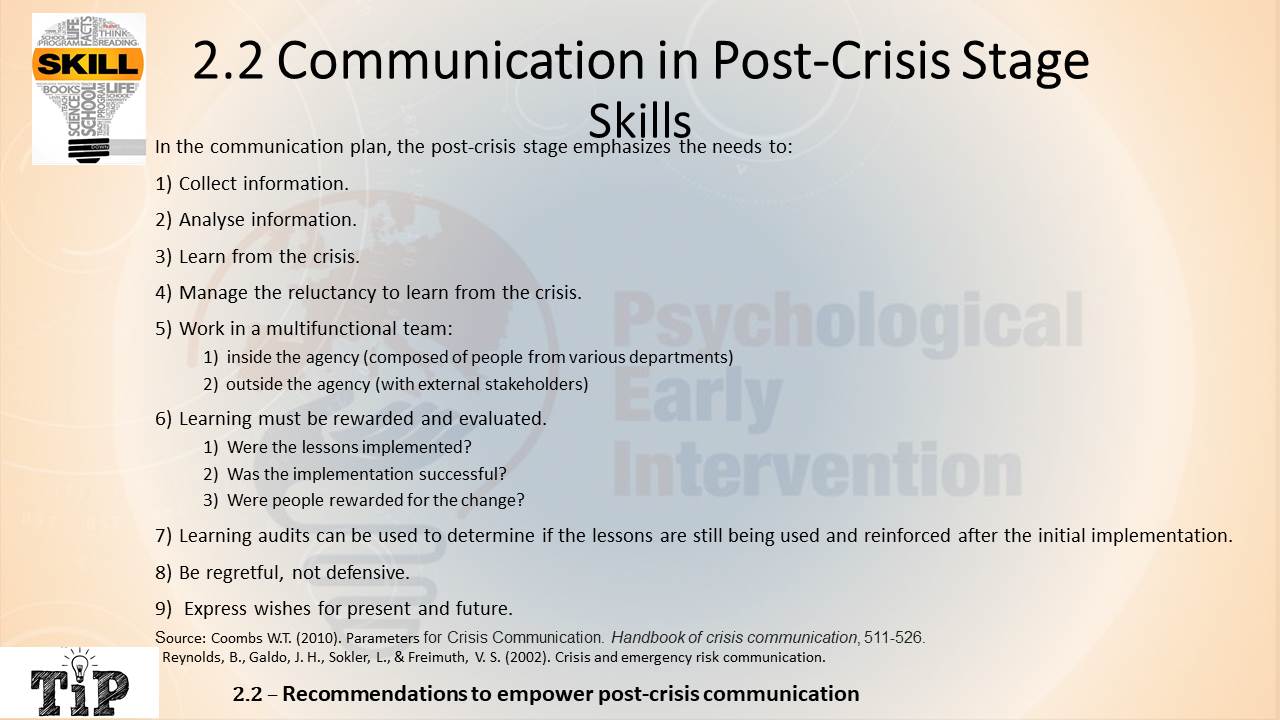
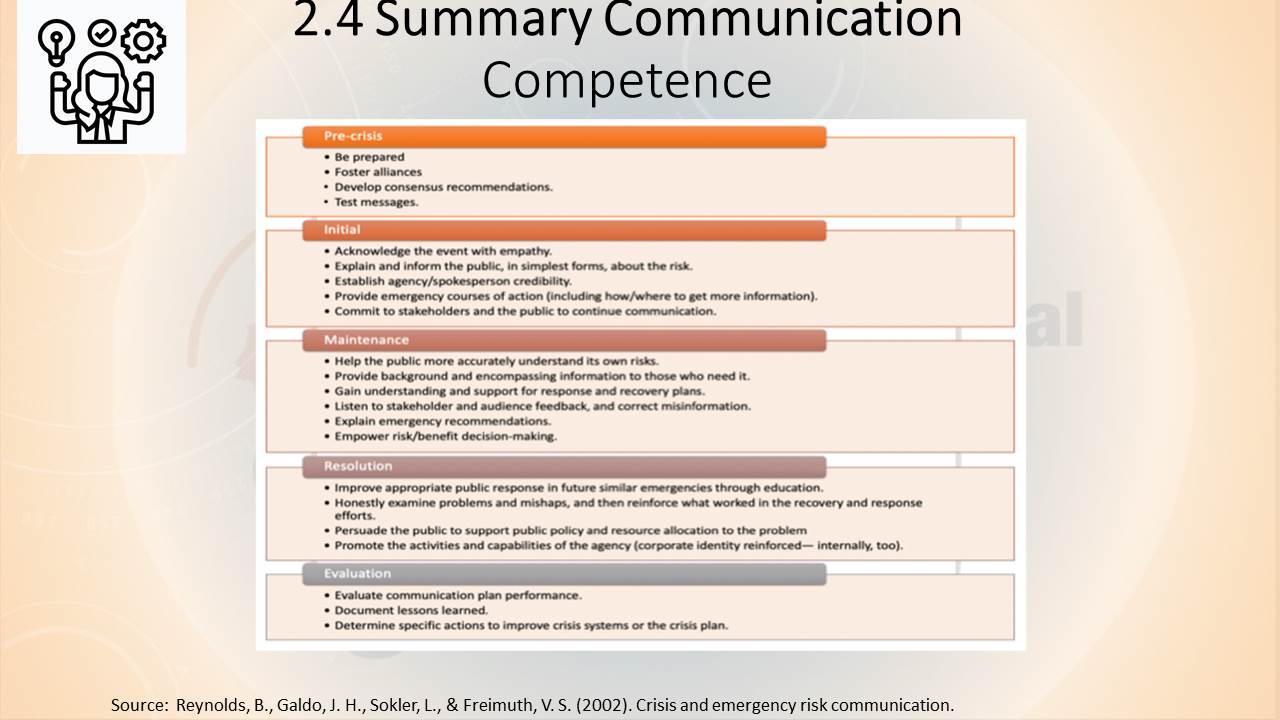
Tip 2.2 Recommendations to empower Post-crisis Communication.pdf
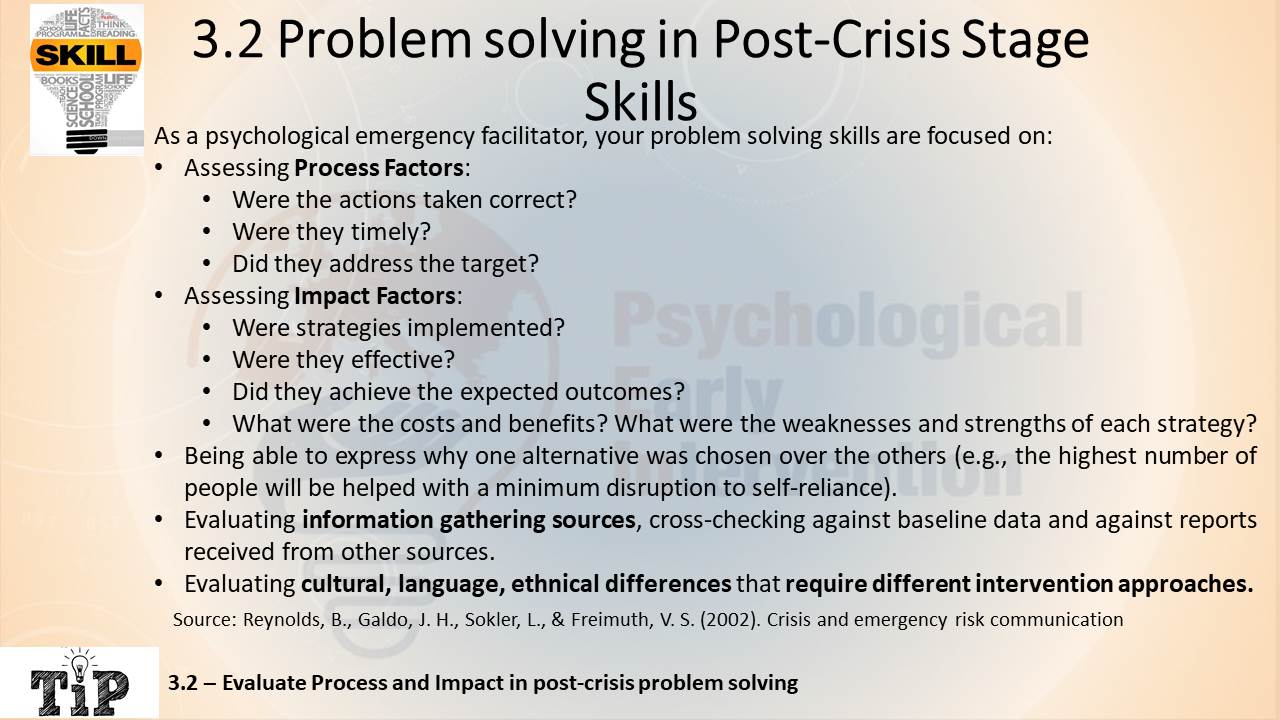
Tip 3.2 Evaluate Process and Impact in post-crisis problem solving.pdf
Tip 4.2 - Checklist to review your decision making in post-crisis phase.pdf
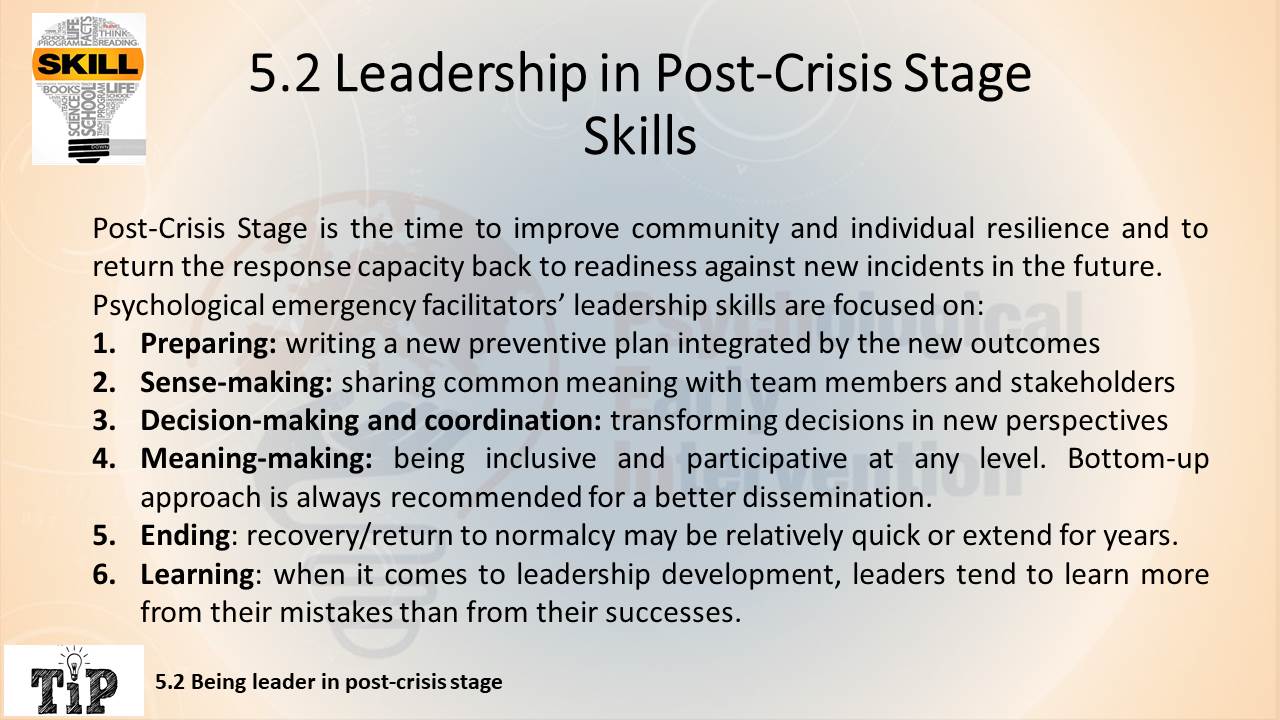
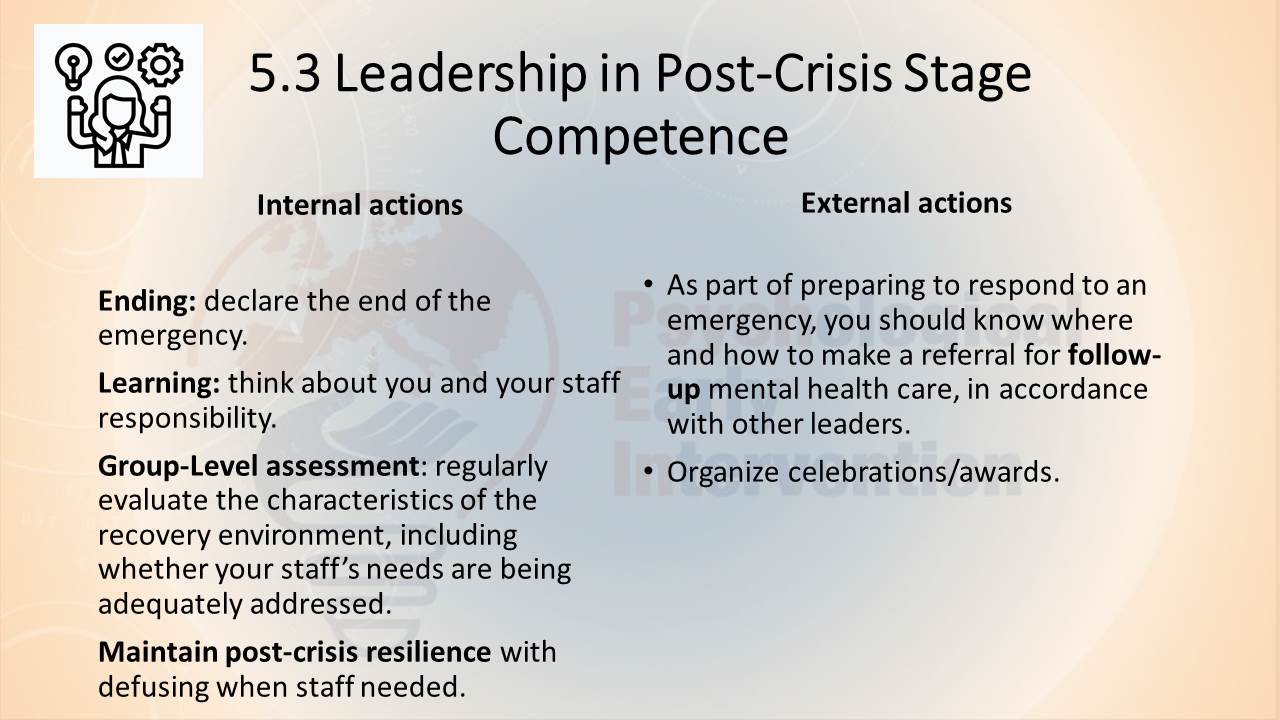
Tip 5.2 Being leader in post crisis.pdf
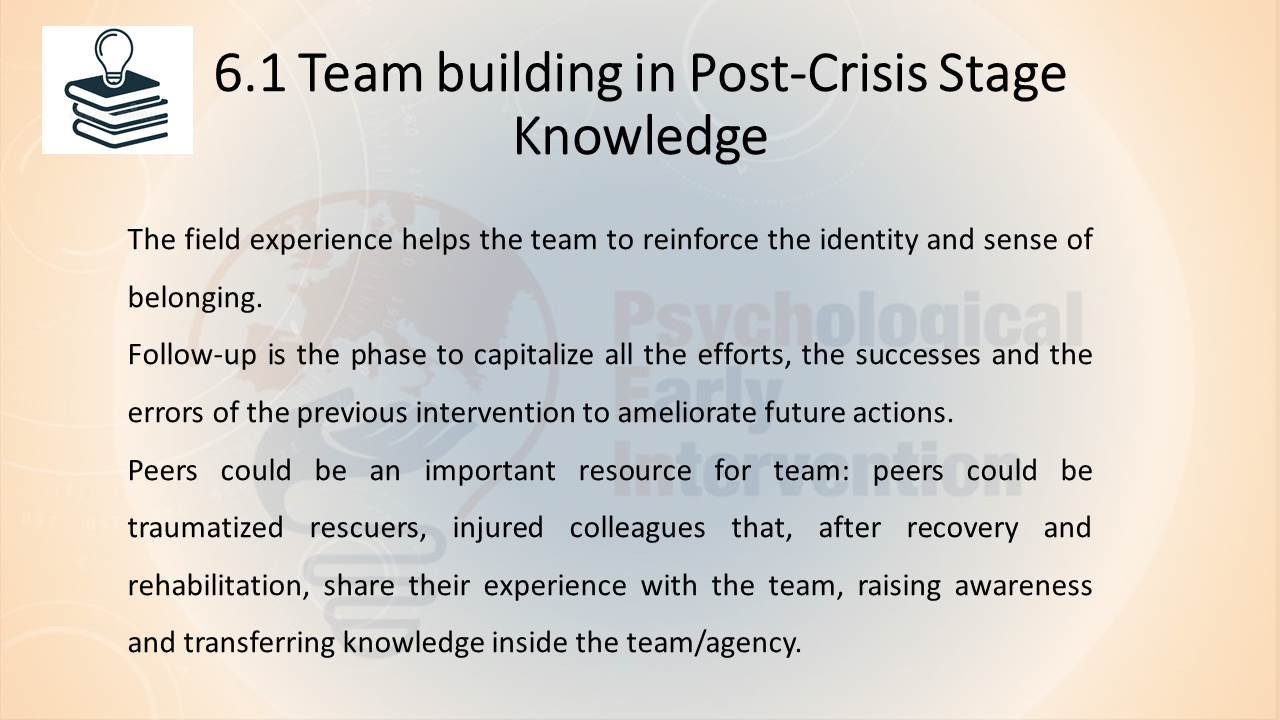
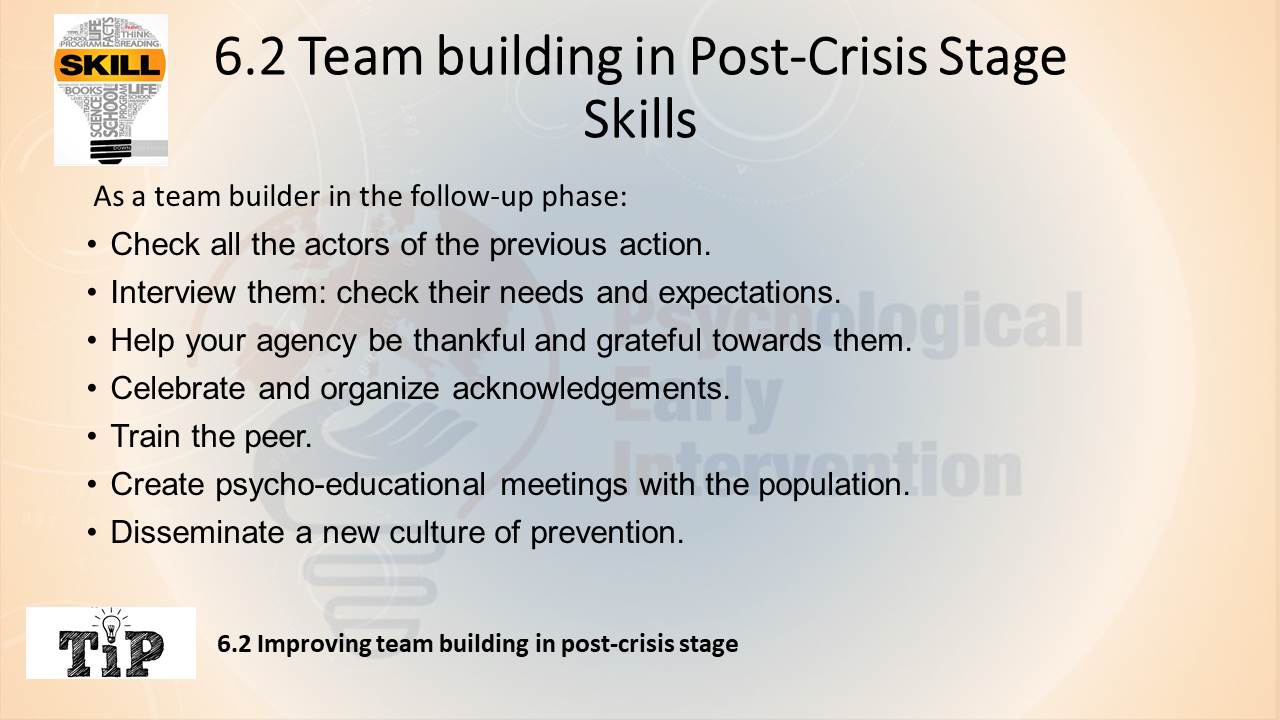
Tip 6.2 Improving team building in the post emergency phase.pdf
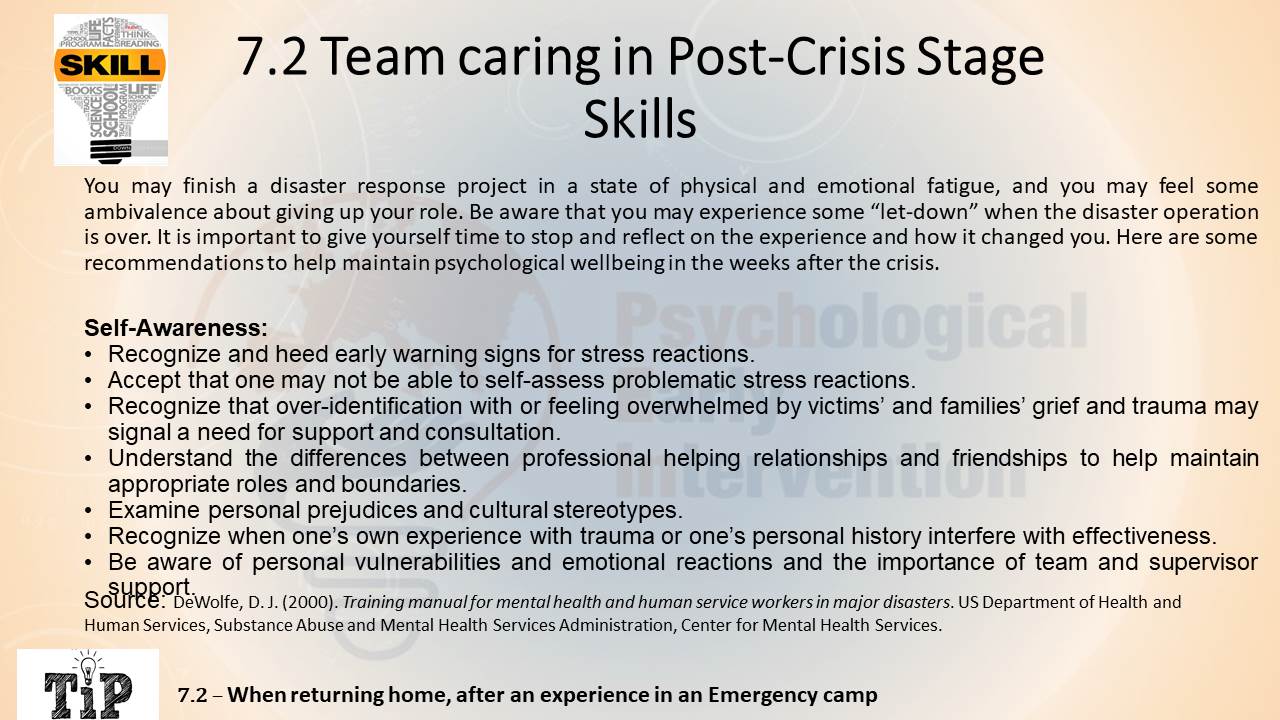
Tip 7.2. When returning home, after an experience in an Emergency camp VM.pdf
CONCLUSION
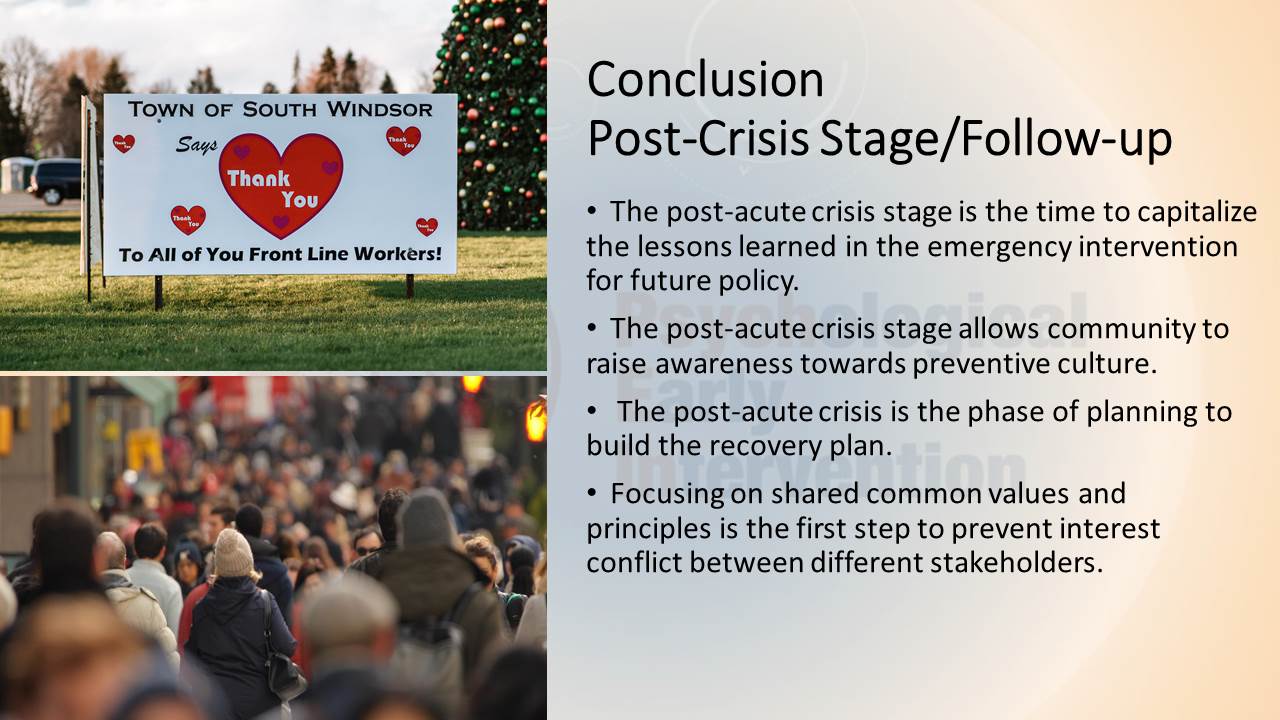
The post-acute crisis stage is the time to capitalize the lessons learned in the emergency intervention for future policy. The post-acute crisis stage allows community to raise awareness towards preventive culture. The post-acute crisis is the phase of planning to build the recovery plan. Focusing on shared common values and principles is the first step to prevent interest conflict between different stakeholders.