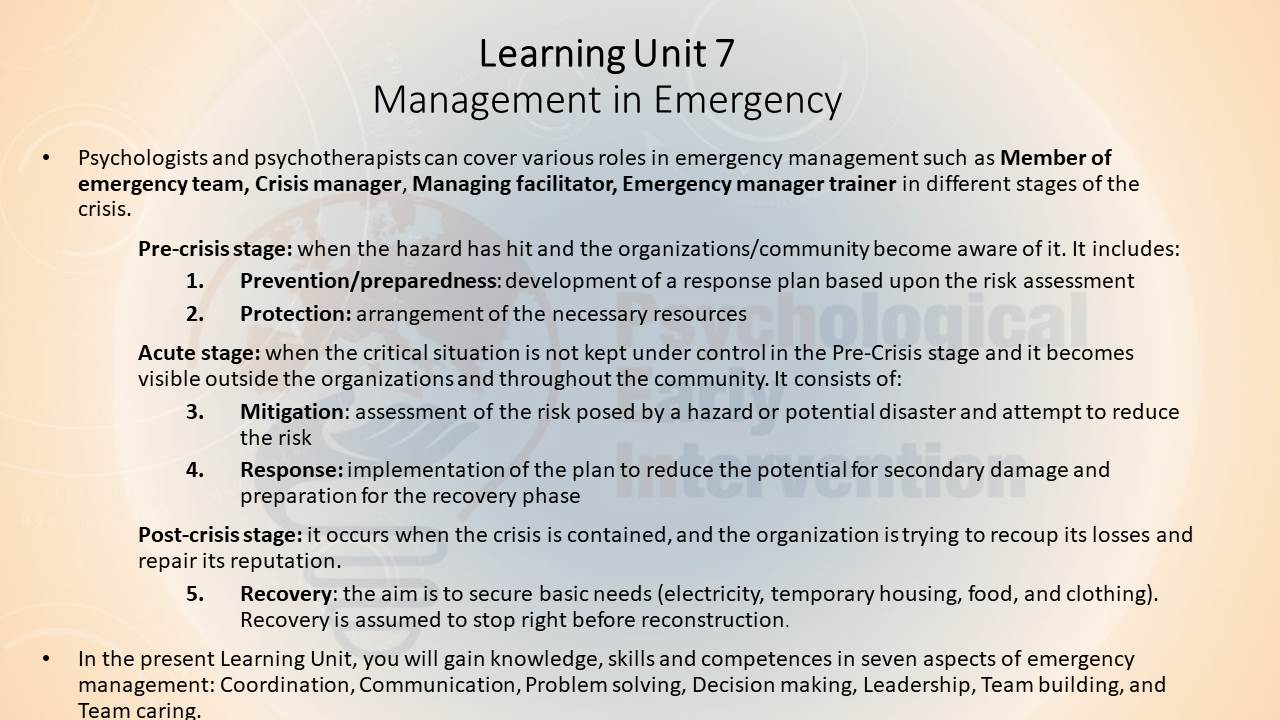
Psychologists and psychotherapists can cover various roles in emergency management such as Member of emergency team, Crisis manager, Managing facilitator, Emergency manager trainer in different stages of the crisis. Pre-crisis stage: when the hazard has hit and the organizations/community become aware of it. It includes:
1. Prevention/preparedness: development of a response plan based upon the risk assessment
2. Protection: arrangement of the necessary resources Acute stage: when the critical situation is not kept under control in the Pre-Crisis stage and it becomes visible outside the organizations and throughout the community. It consists of:
3. Mitigation: assessment of the risk posed by a hazard or potential disaster and attempt to reduce the risk
4. Response: implementation of the plan to reduce the potential for secondary damage and preparation for the recovery phase Post-crisis stage: it occurs when the crisis is contained, and the organization is trying to recoup its losses and repair its reputation.
5. Recovery: the aim is to secure basic needs (electricity, temporary housing, food, and clothing). Recovery is assumed to stop right before reconstruction.
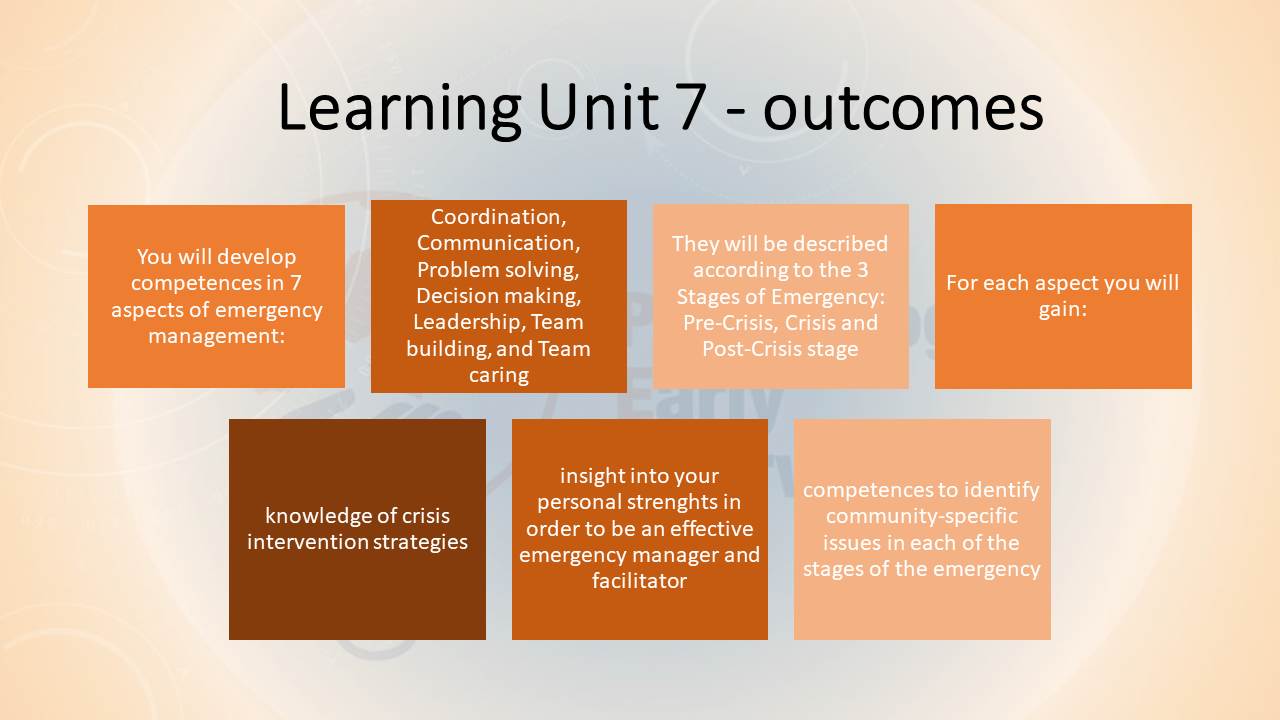
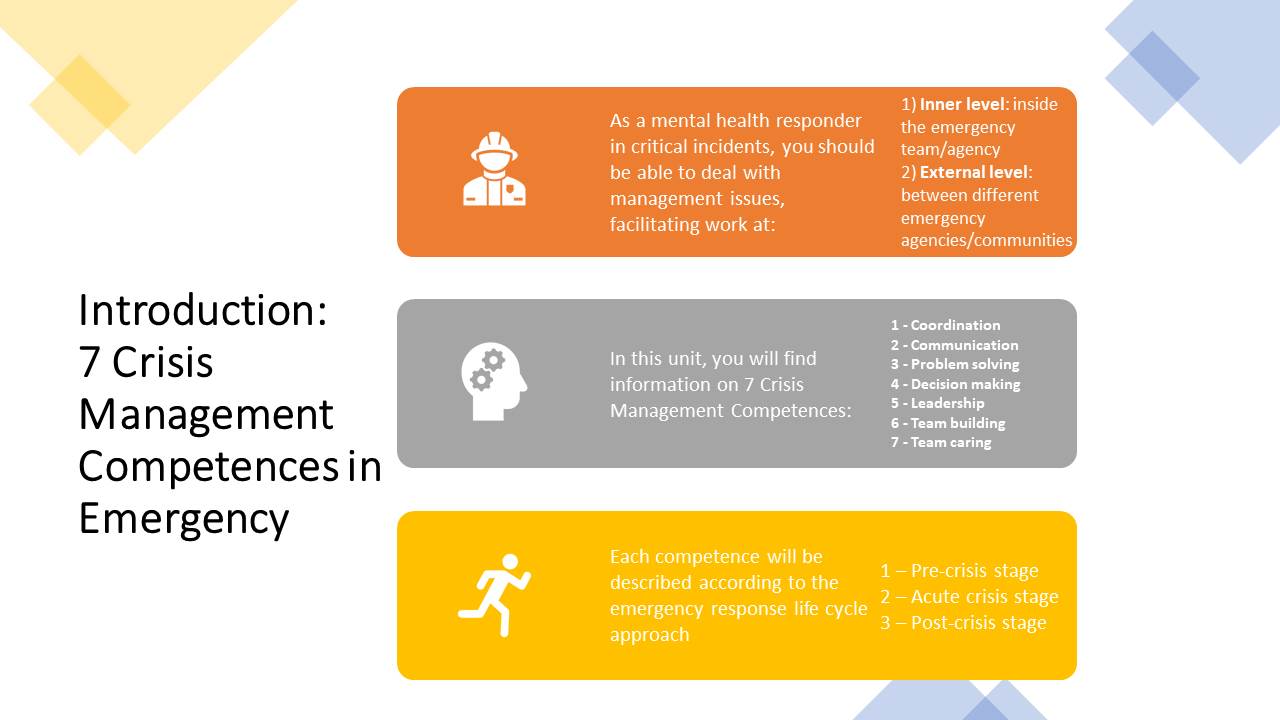
In the present Learning Unit, you will gain knowledge, skills and competences in seven aspects of emergency management: Coordination, Communication, Problem solving, Decision making, Leadership, Team building, and Team caring.