This project (2020-1-PL-KA202-082075) has been funded with support from the European Commission. This web site reflects the views only of the author, and the Commission cannot be held responsible for any use which may be made of the information contained therein.
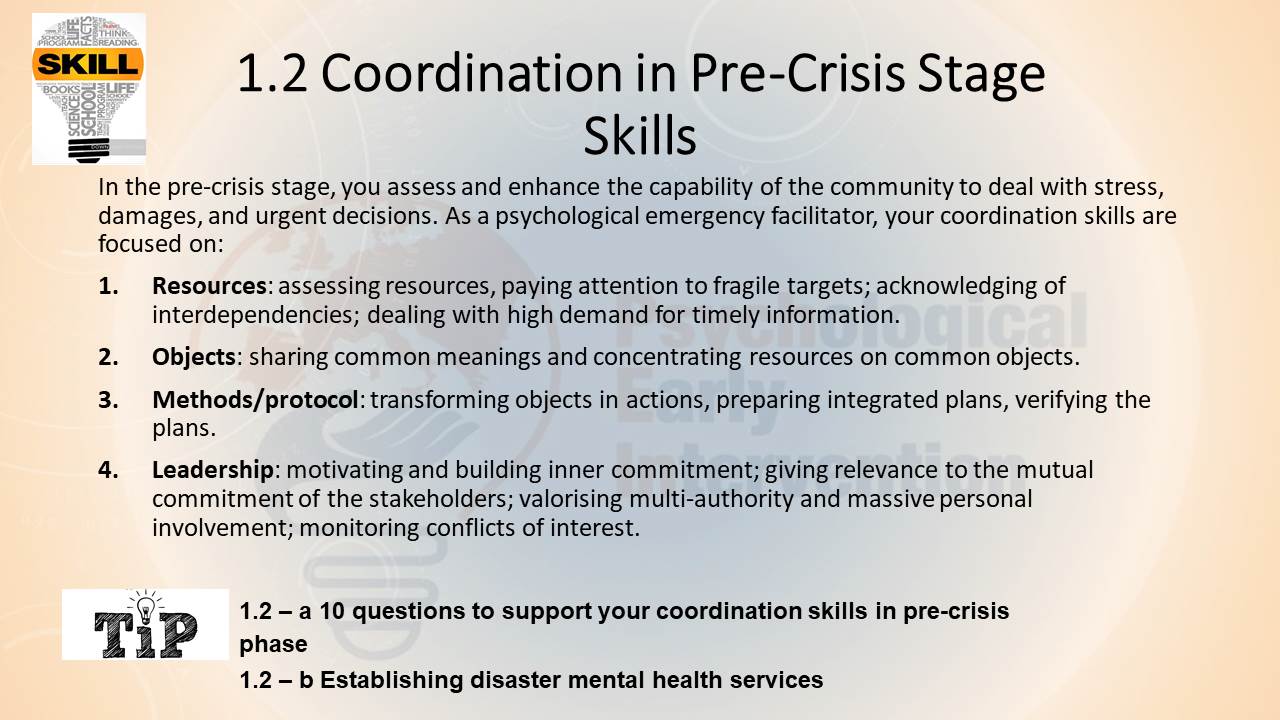
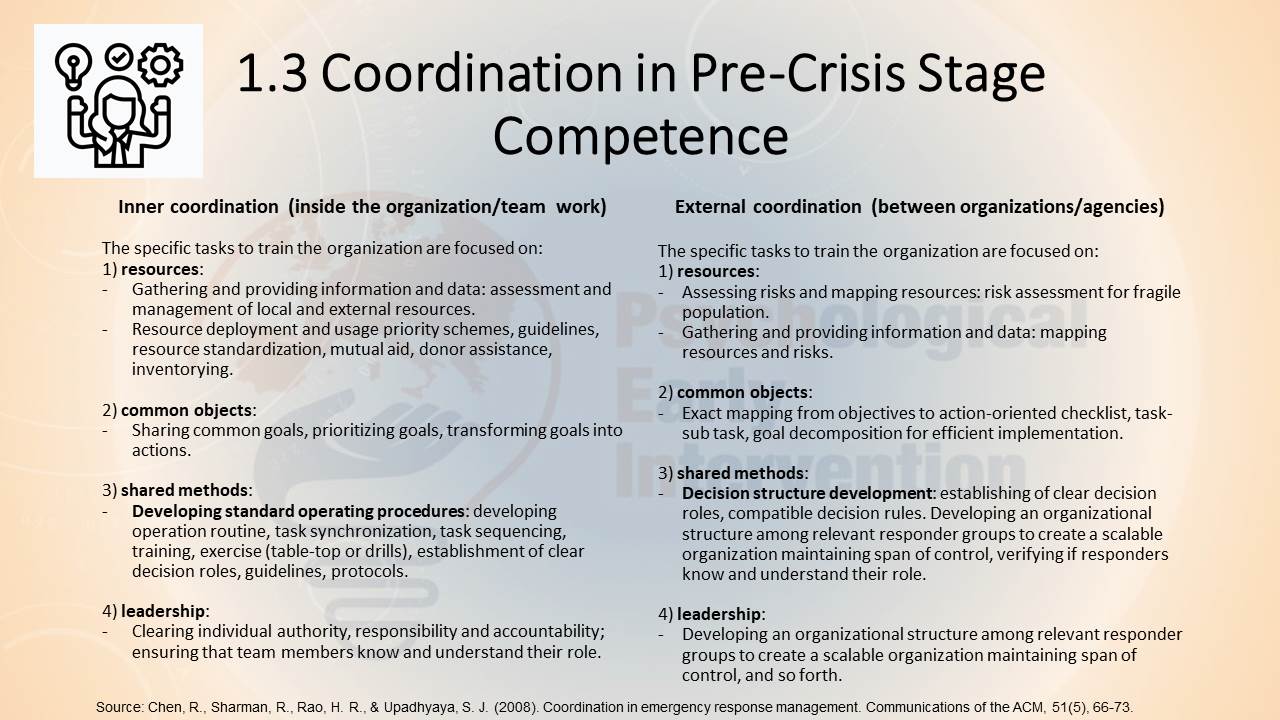
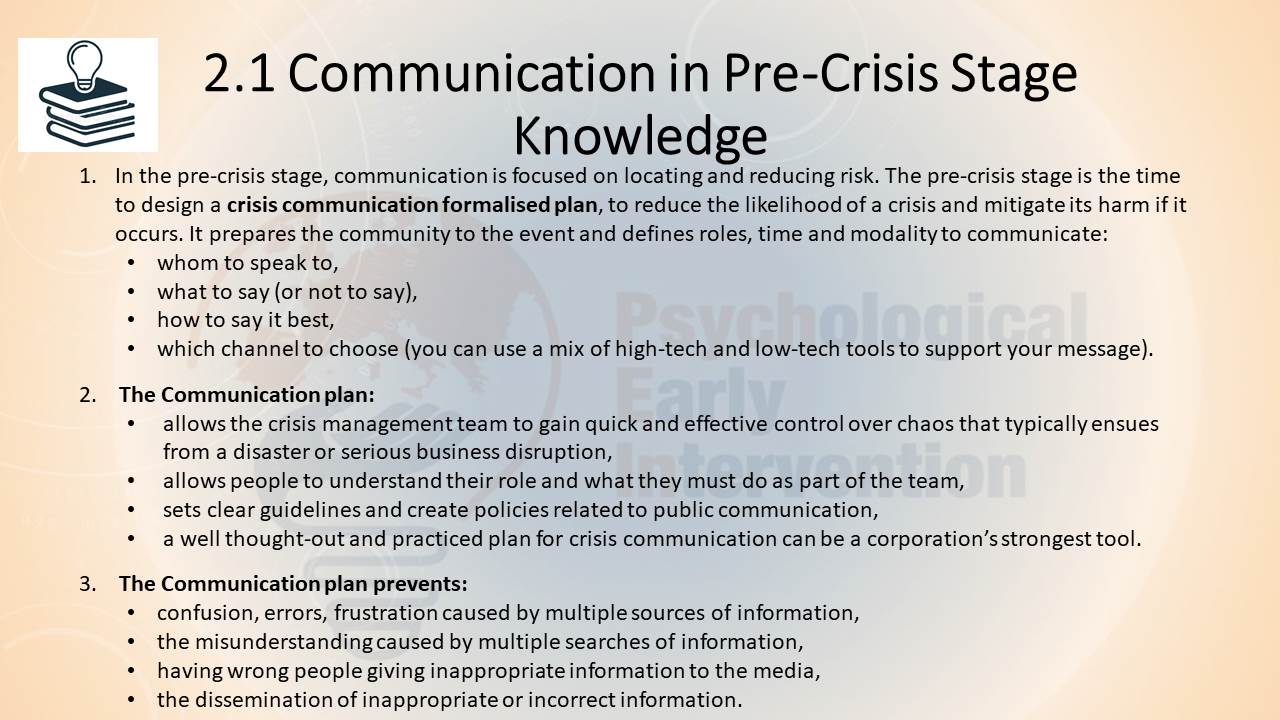
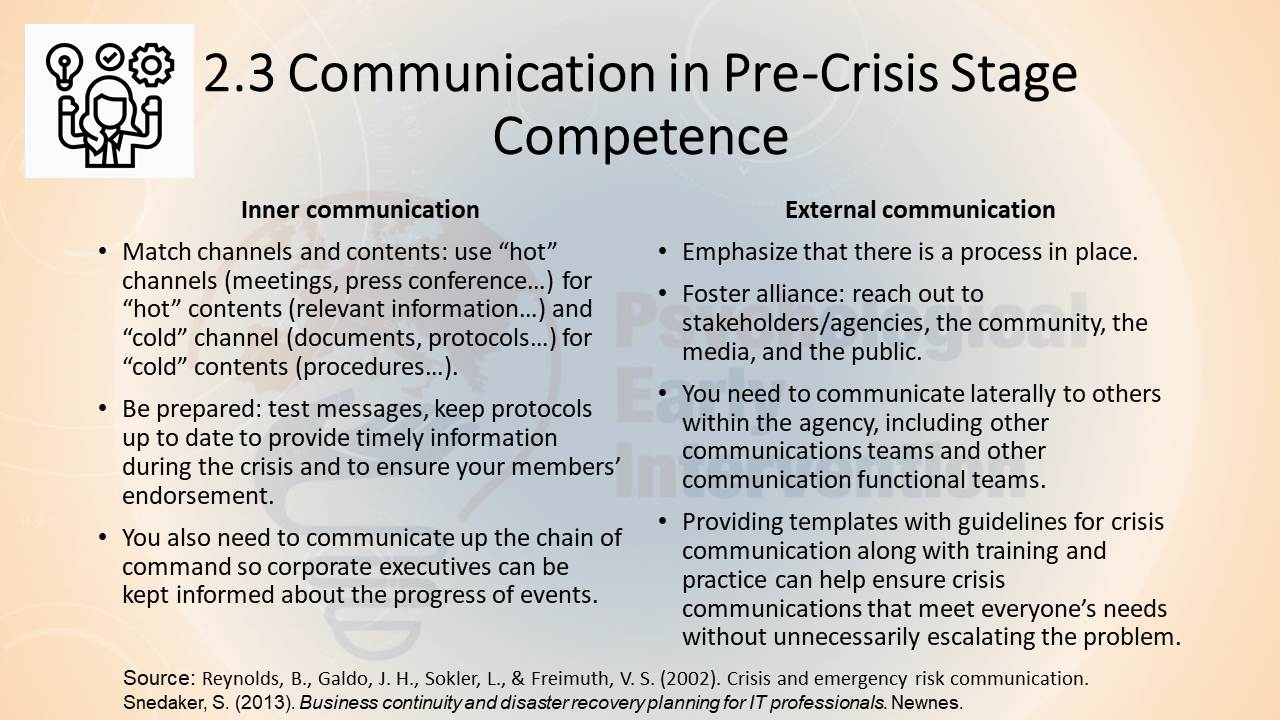
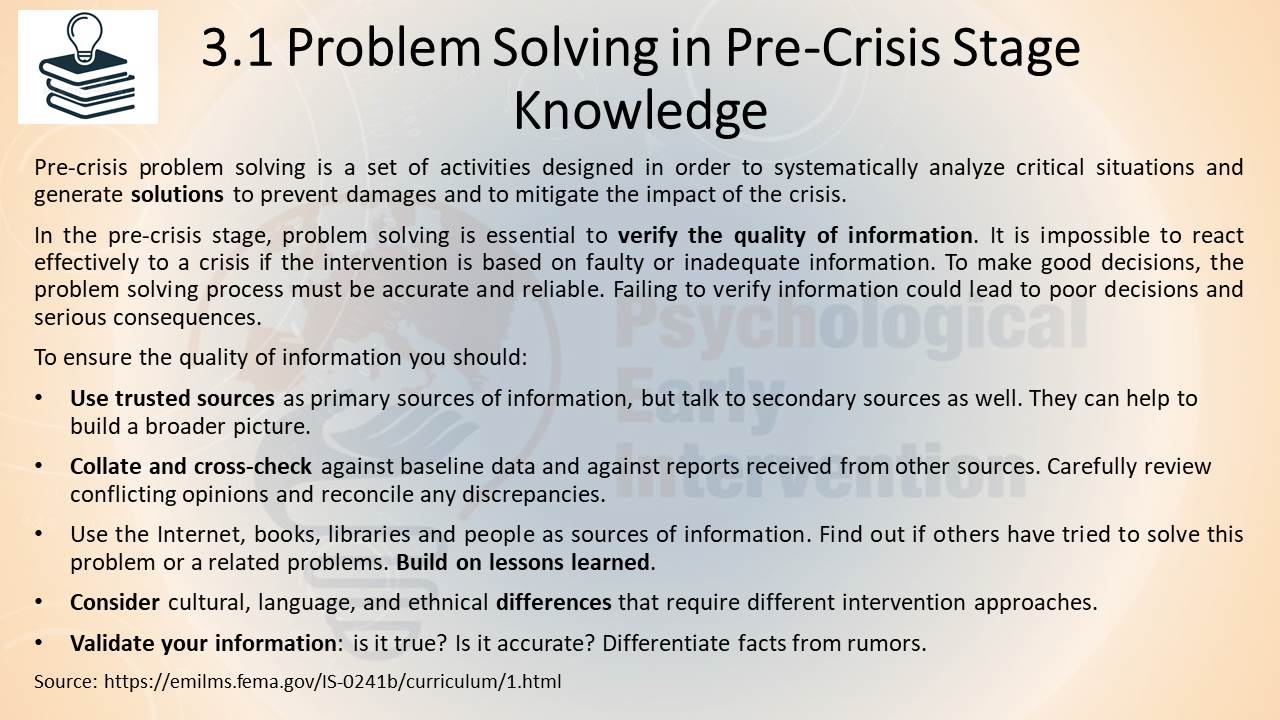
The pre-crisis stage is focused on identifying and reducing risks, according to the anticipatory model of crisis management. Prevention and vigilance are the top priorities according to the anticipatory model. The pre-crisis stage typically concerns preparedness issues such as planning and training, in order to assess the operational capacity and the resilience inside the agency and between agencies during a crisis.
CONTENT
Chapter 1.pdf
TIPS
Tip 1.2 - a 10 questions to support your coordination skills in pre-phase.pdf
Tip 1.2 - b ESTABLISHING DISASTER MENTAL HEALTH SERVICES.pdf
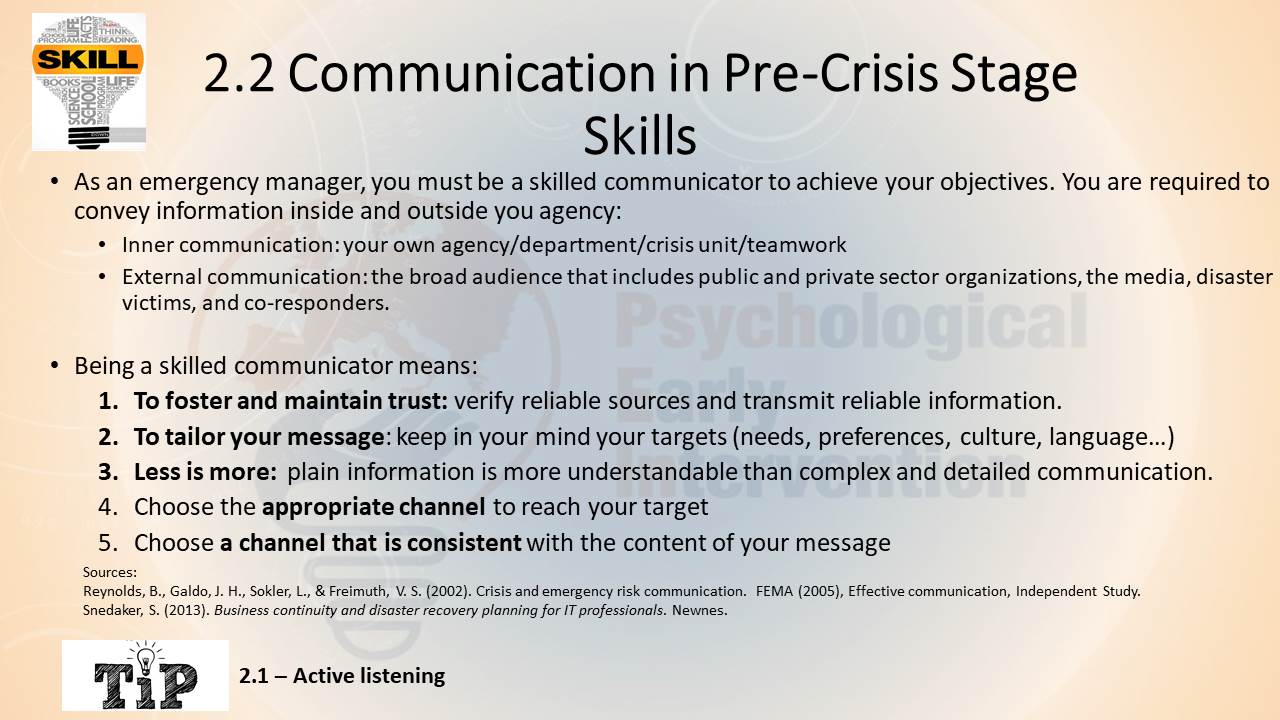
Tip 2.1 active listening.pdf
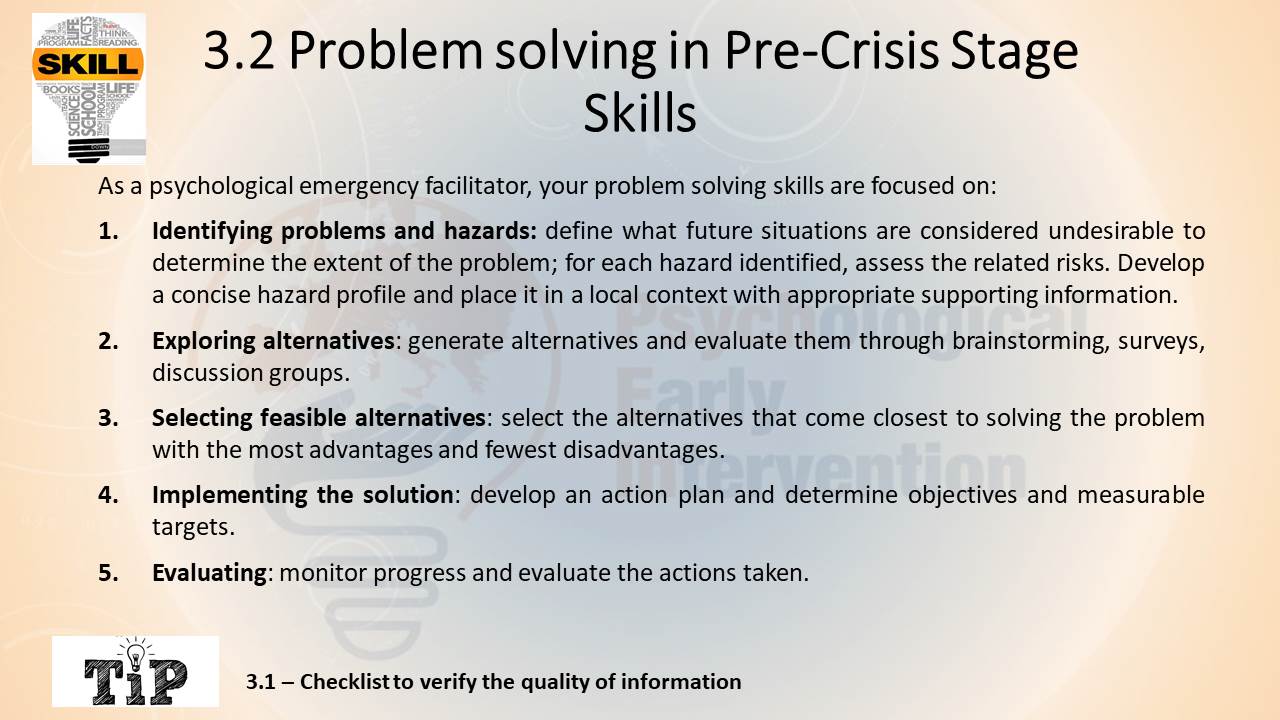
Tip 3.2 Checklist to verify the quality of information.pdf
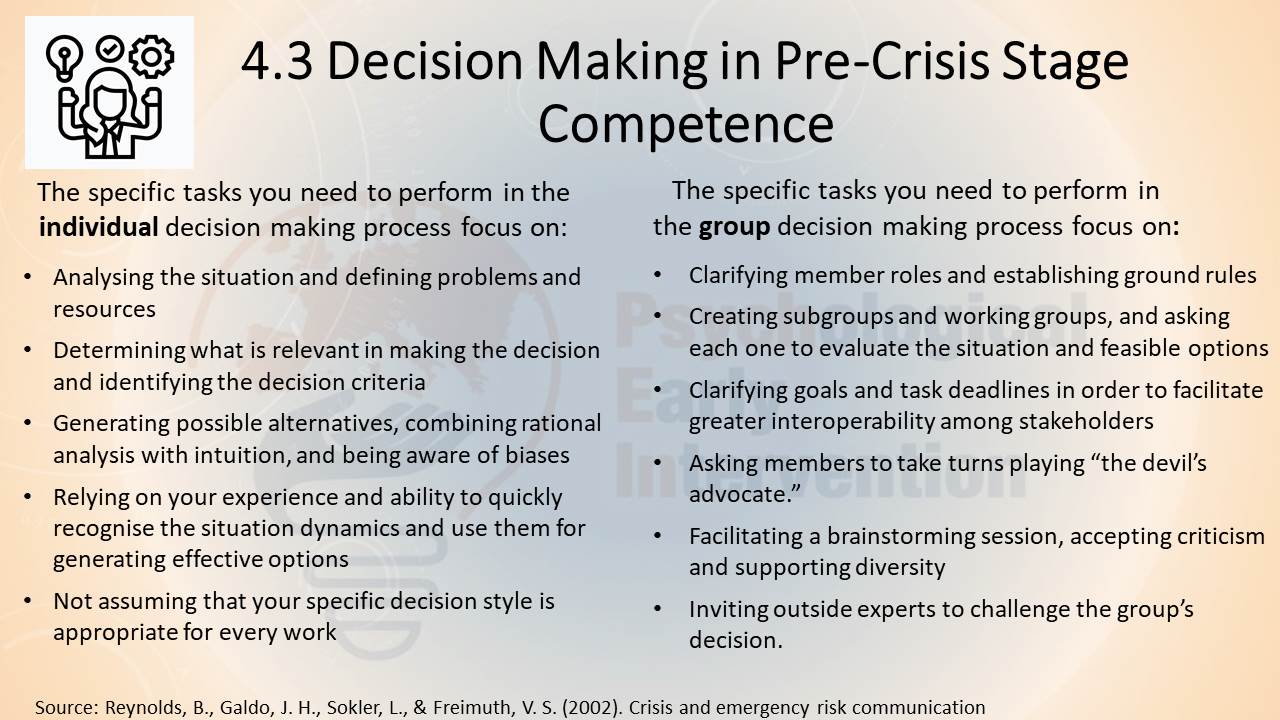
Tip 4.2 Recommendations to empower group decision making.pdf
Tip 5.2 Check your leadership- self-efficacy exercise.pdf
Tip 6.2 Create a culture of teamwork.pdf
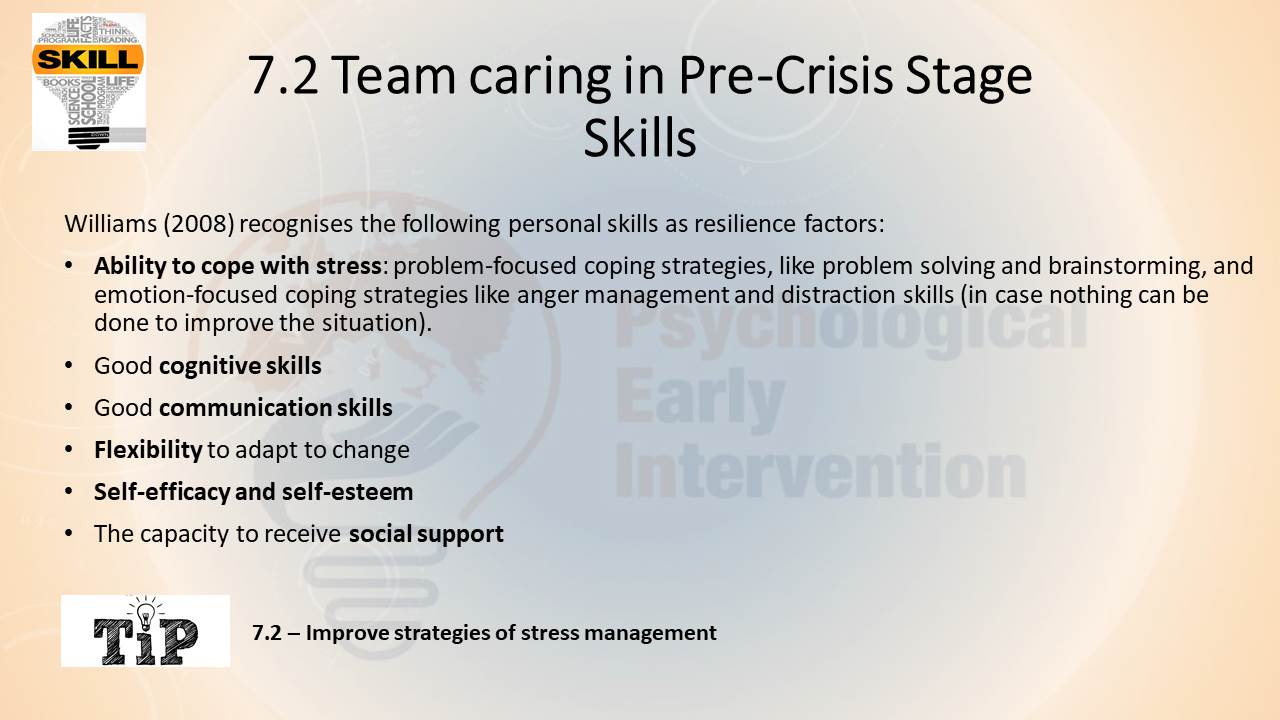
Tip 7.2 Improve strategies of stress management.pdf
CONCLUSION
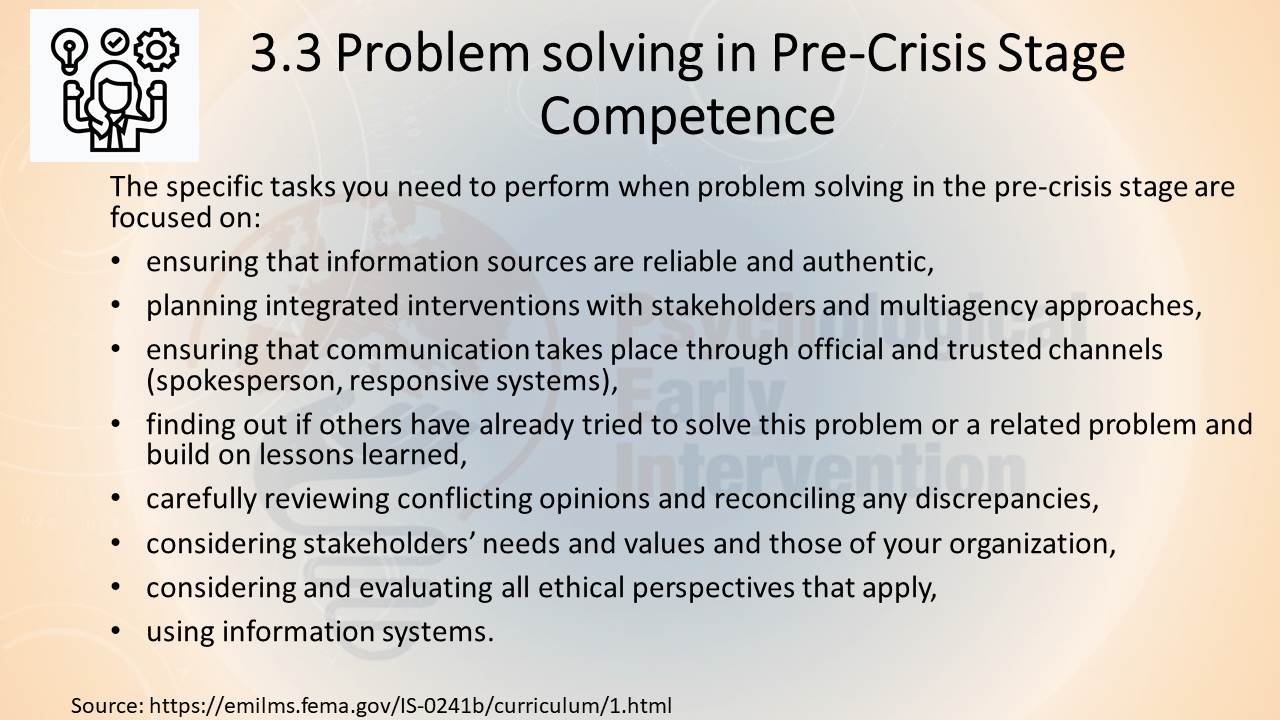
The pre-crisis stage is crucial for reducing risks and mitigating the impact of a crisis. Participative prevention plan is the main tool to assess targets’ needs, including fragile targets and minorities. Multiagency approach needs a coordinated networking from the very beginning of the pre-crisis stage. Dissemination through population needs a coordinated and effective communication plan. The contribution of psychological competences is crucial in any role of the pre-crisis stage: as rescuers (members of the team), as trainers, as crisis managers and facilitators, and as consultants.