This project (2020-1-PL-KA202-082075) has been funded with support from the European Commission. This web site reflects the views only of the author, and the Commission cannot be held responsible for any use which may be made of the information contained therein.
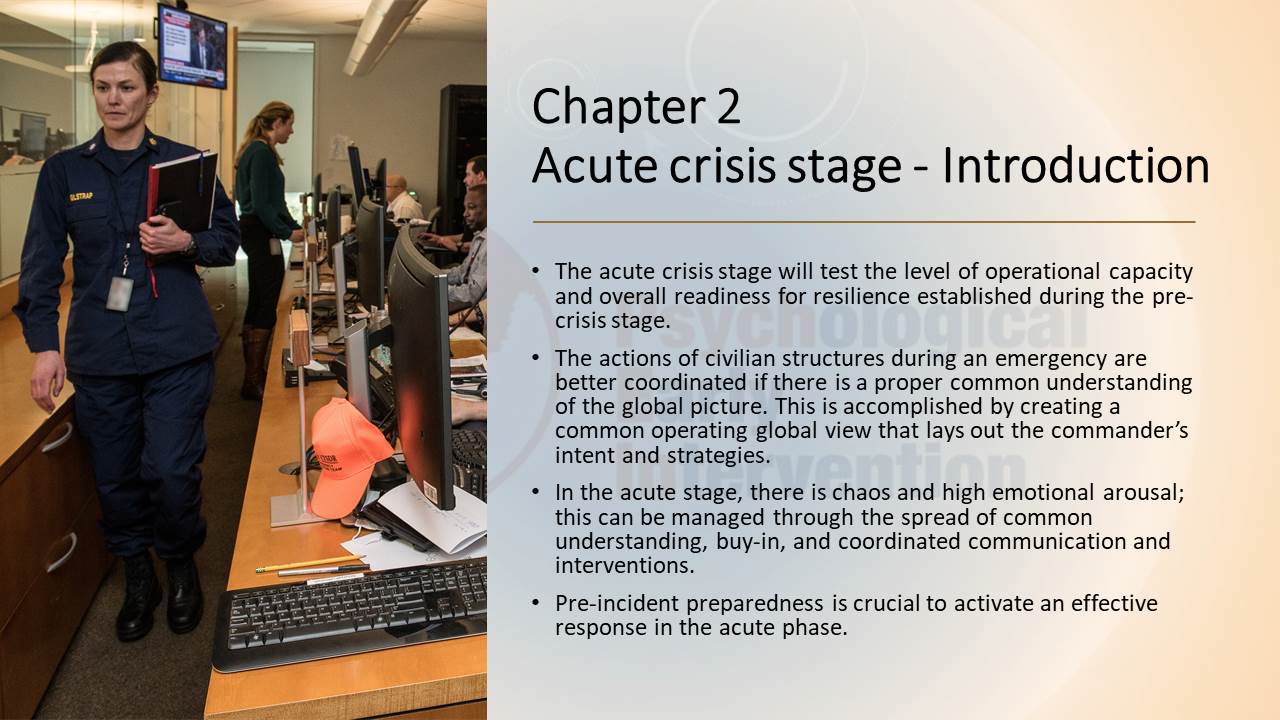
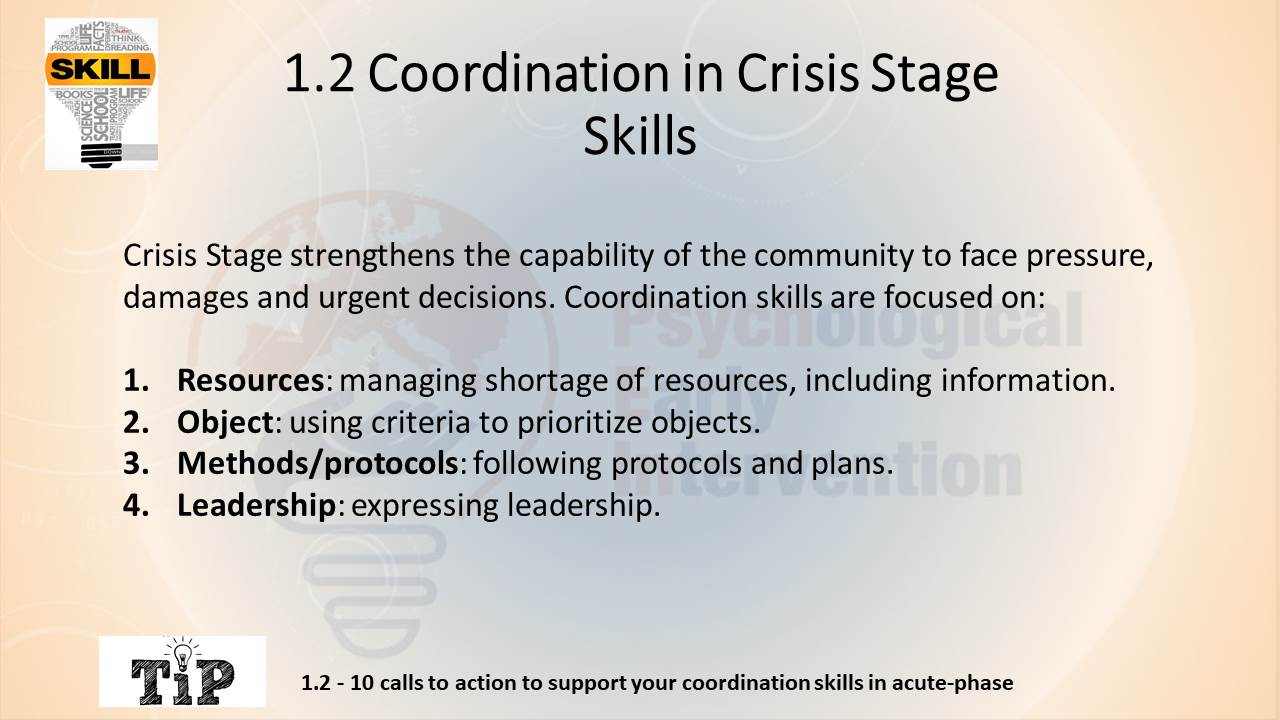
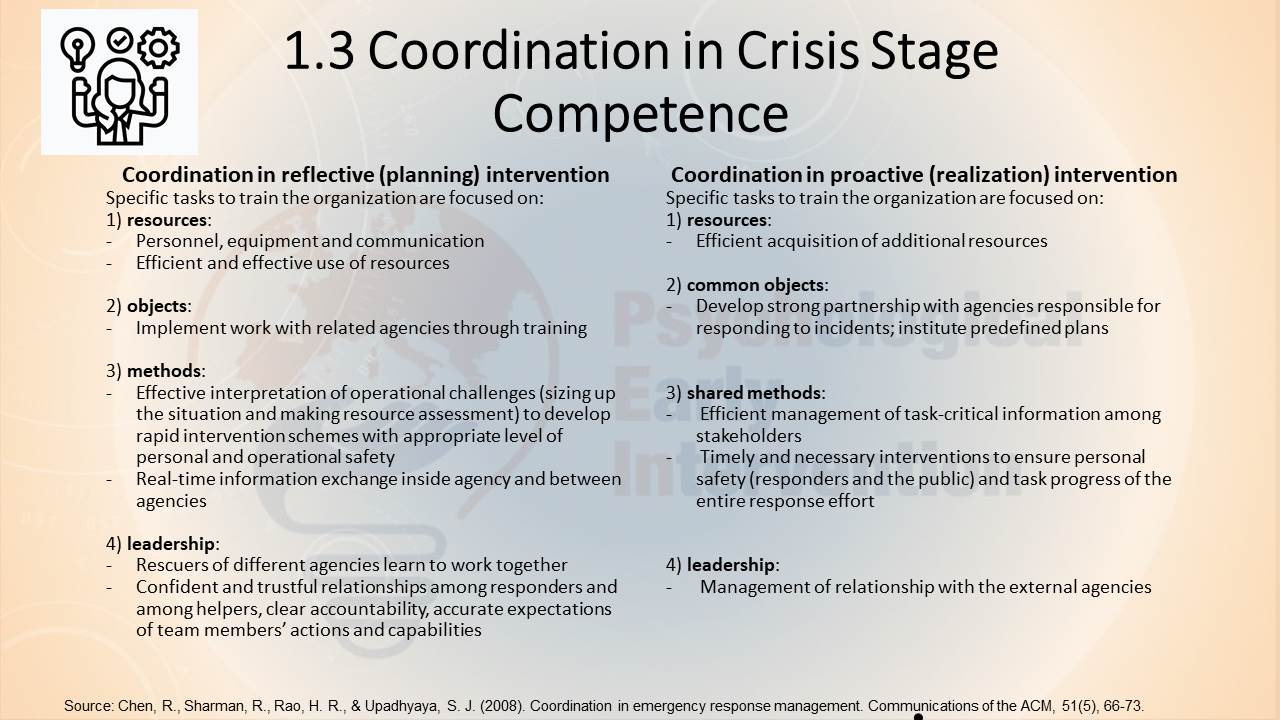
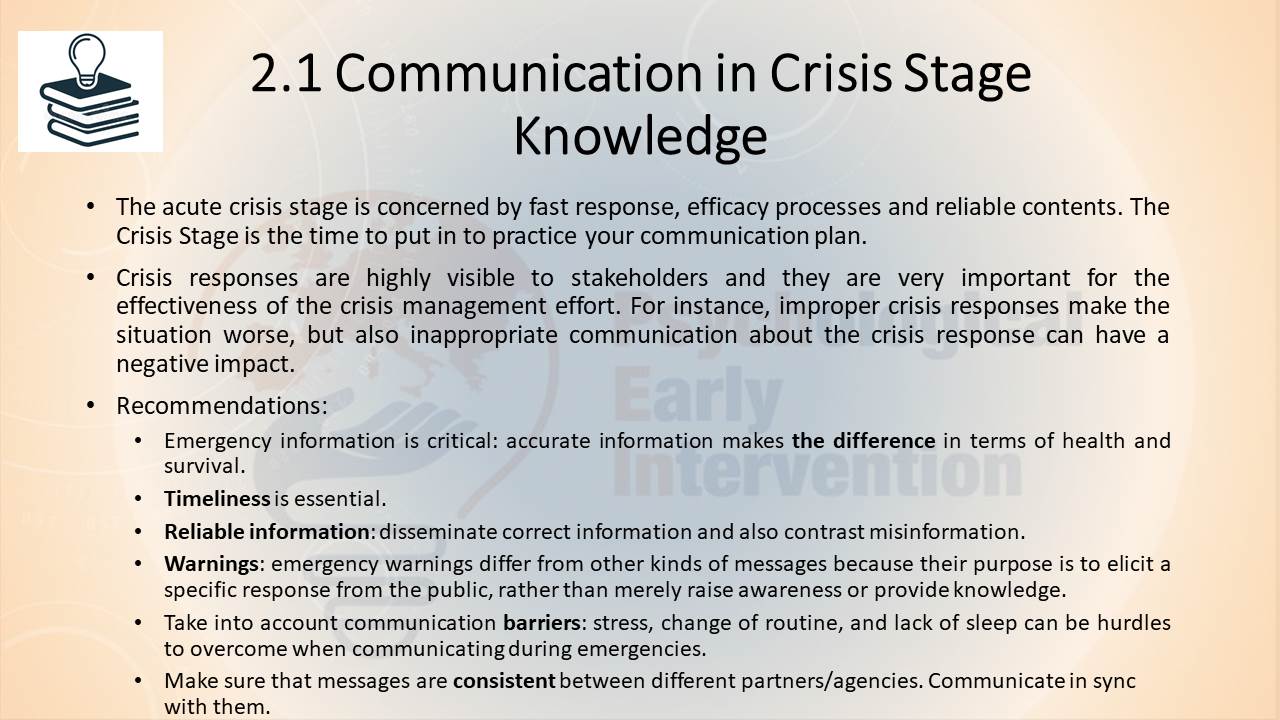
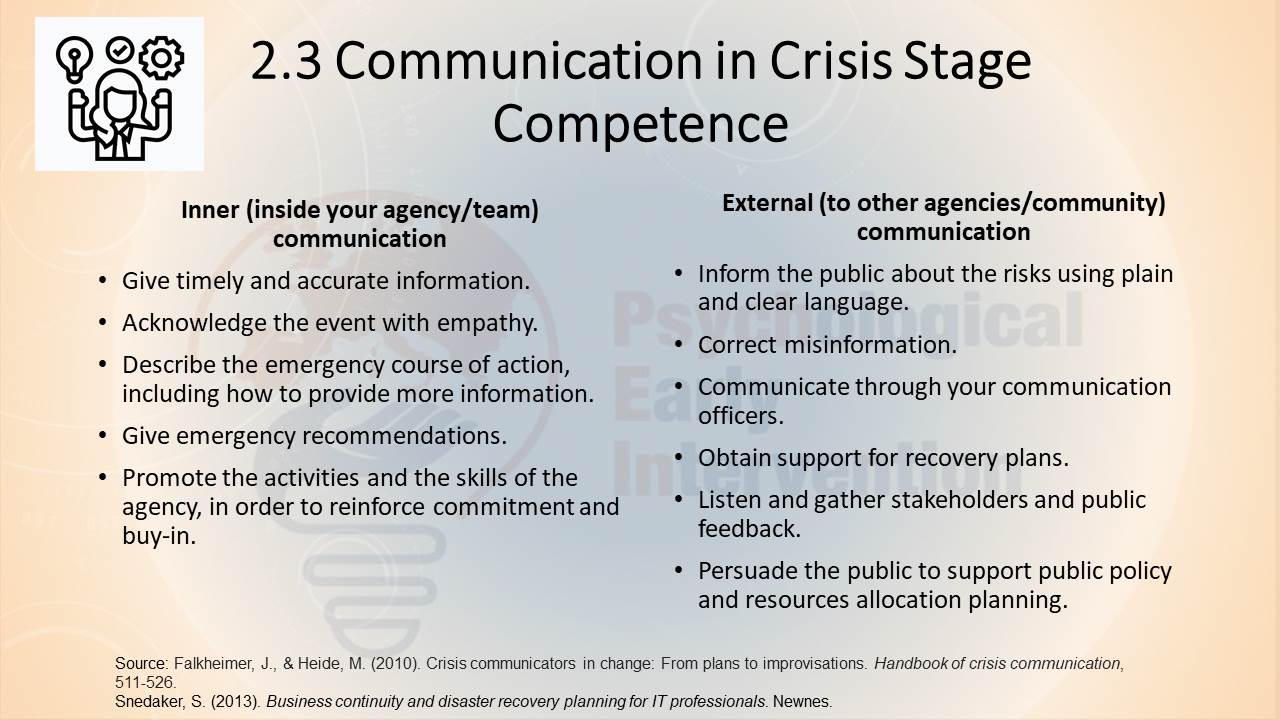
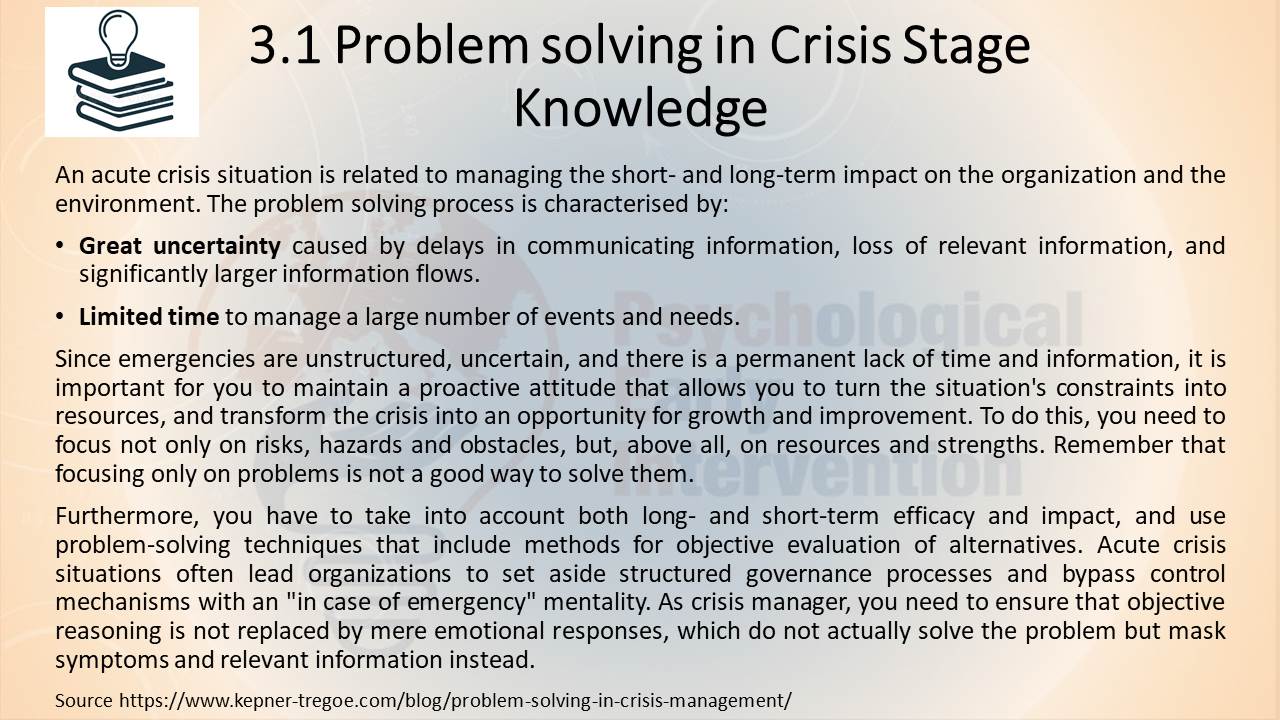
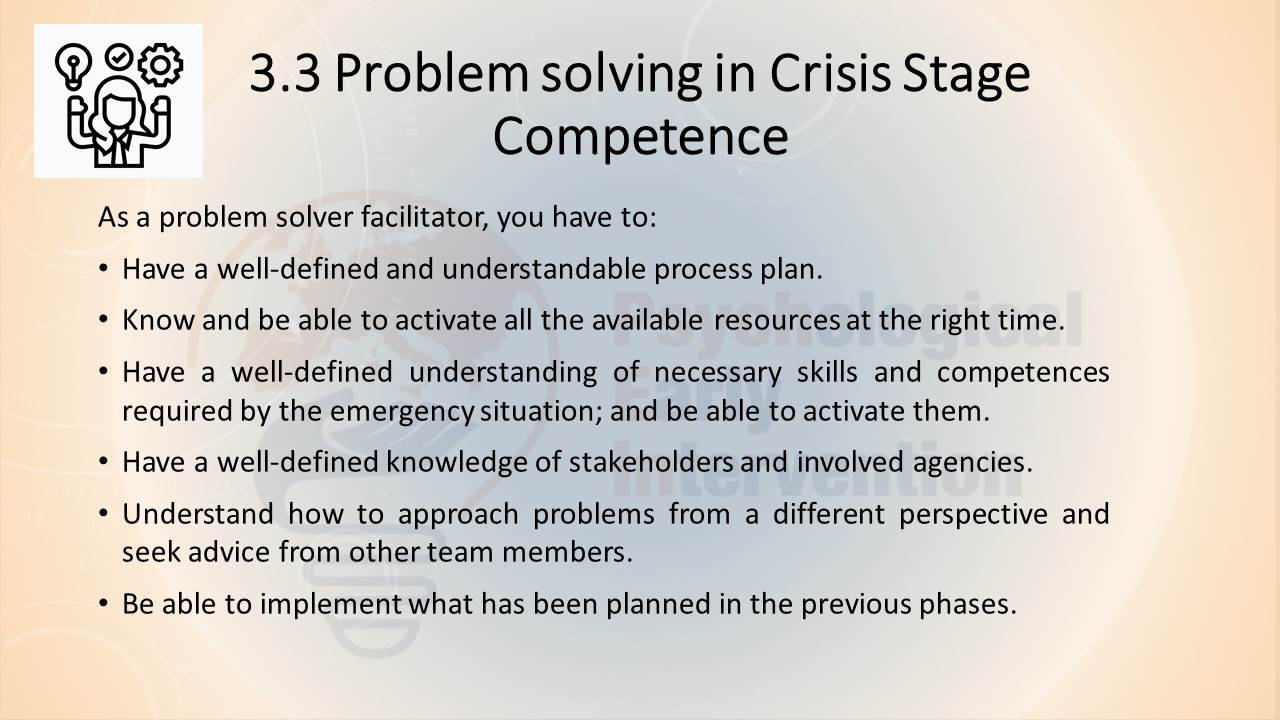
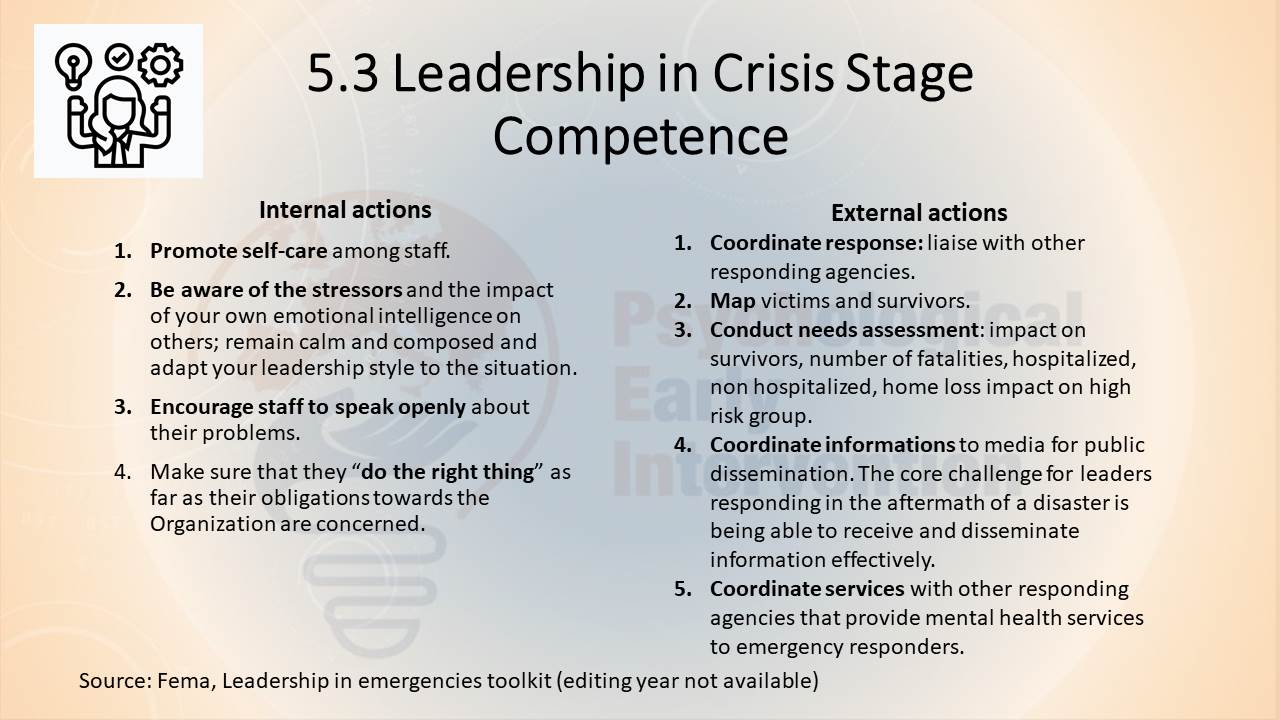
The acute crisis stage will test the level of operational capacity and overall readiness for resilience established during the pre-crisis stage. The actions of civilian structures during an emergency are better coordinated if there is a proper common understanding of the global picture. This is accomplished by creating a common operating global view that lays out the commander’s intent and strategies. In the acute stage, there is chaos and high emotional arousal; this can be managed through the spread of common understanding, buy-in, and coordinated communication and interventions. Pre-incident preparedness is crucial to activate an effective response in the acute phase.
CONTENT
Chapter 2.pdf
TIPS
TXG31Z~S.PDF
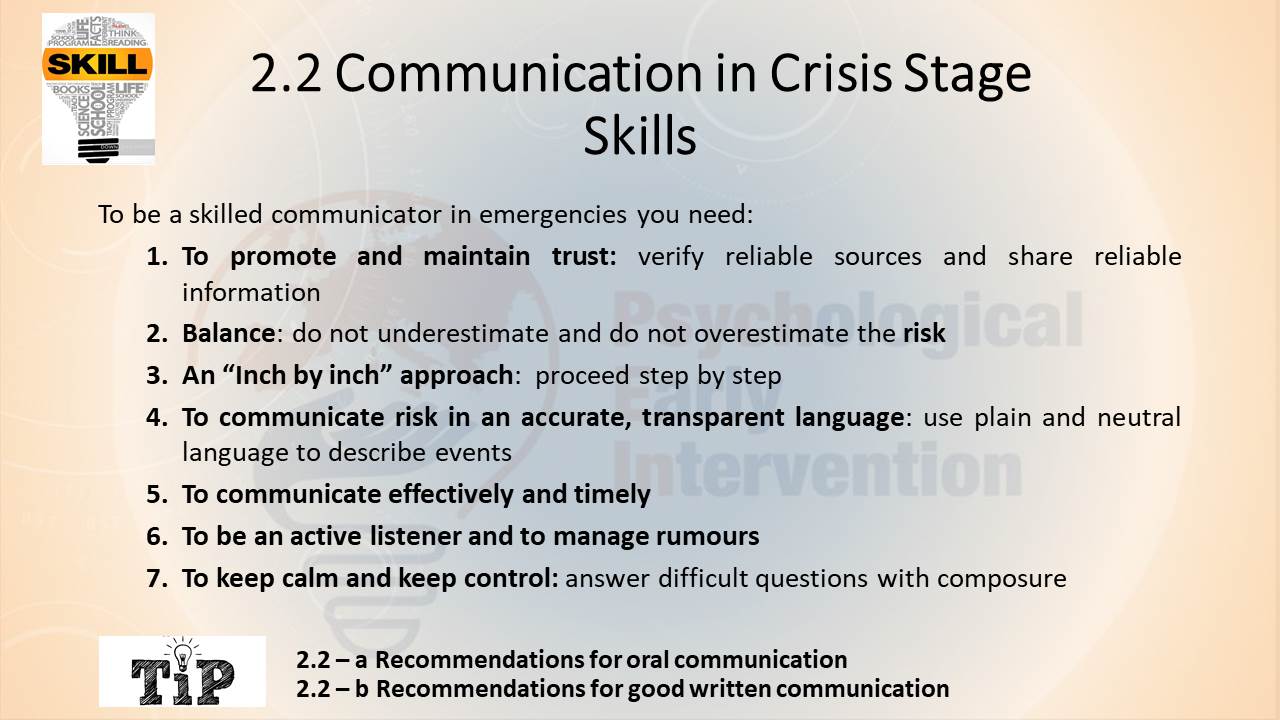
Tip 2.2 - b Recommendation for good written communication.pdf
Tip 2.2 a Recommendations for oral communication.pdf
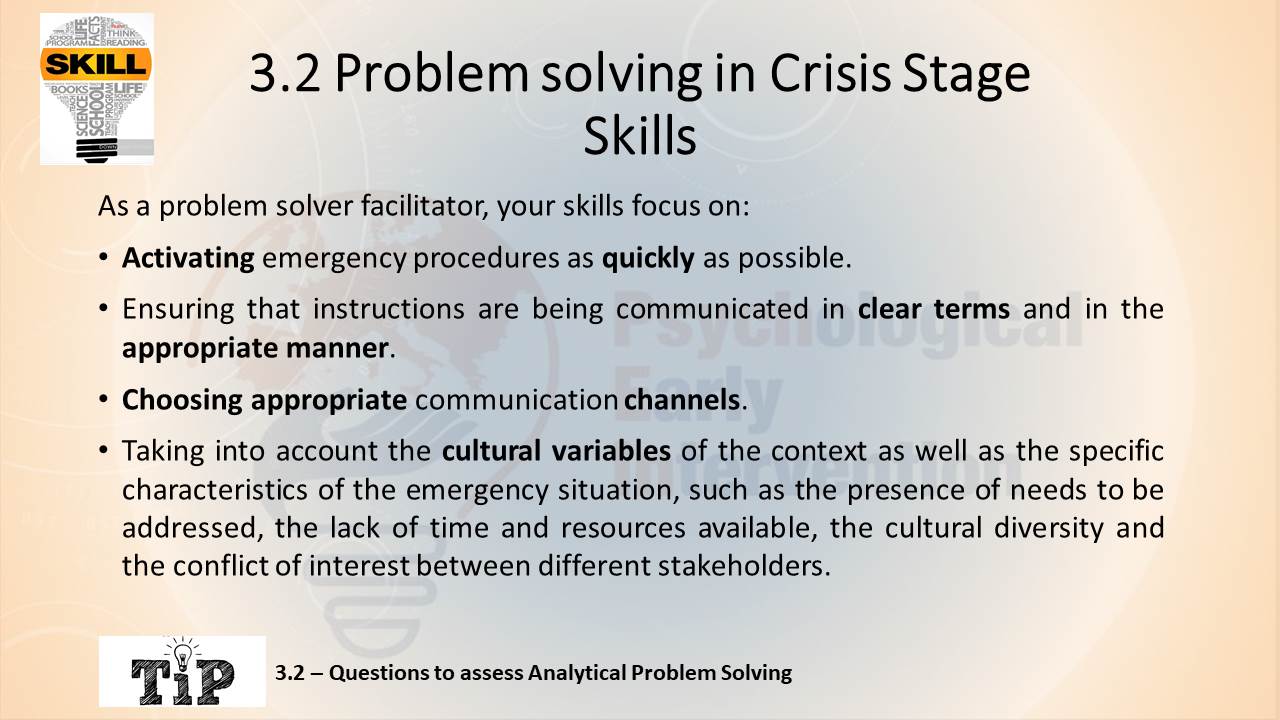
Tip 3.2 Questions to assess Analytical Problem Solving.pdf
Tip 4.2 Crisis assessing emergency situation.pdf
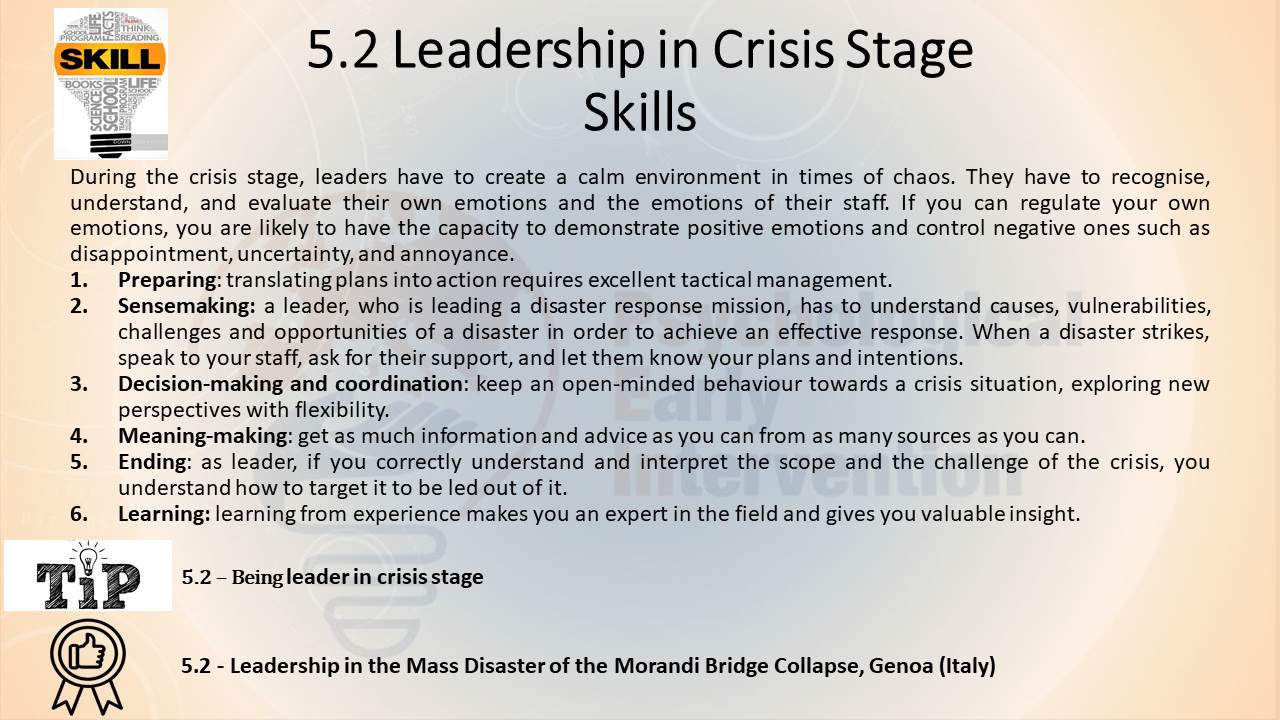
Tip 5.2 Being leader in crisis.pdf
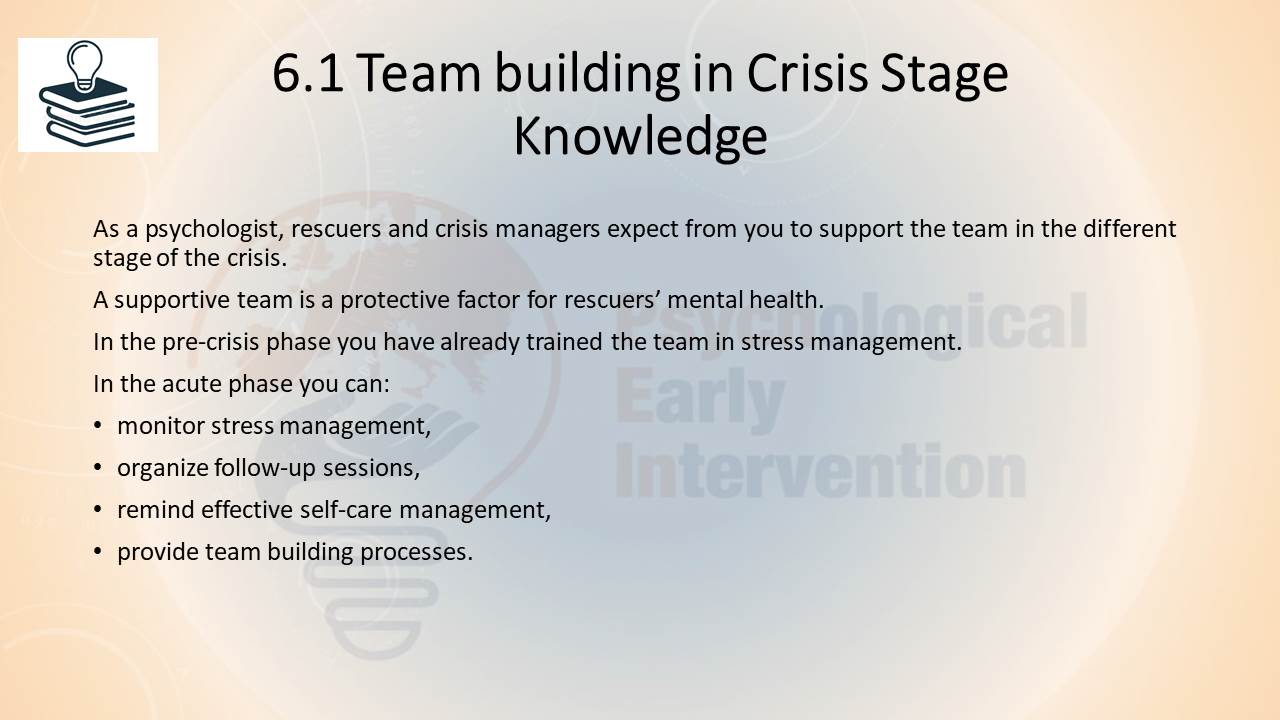
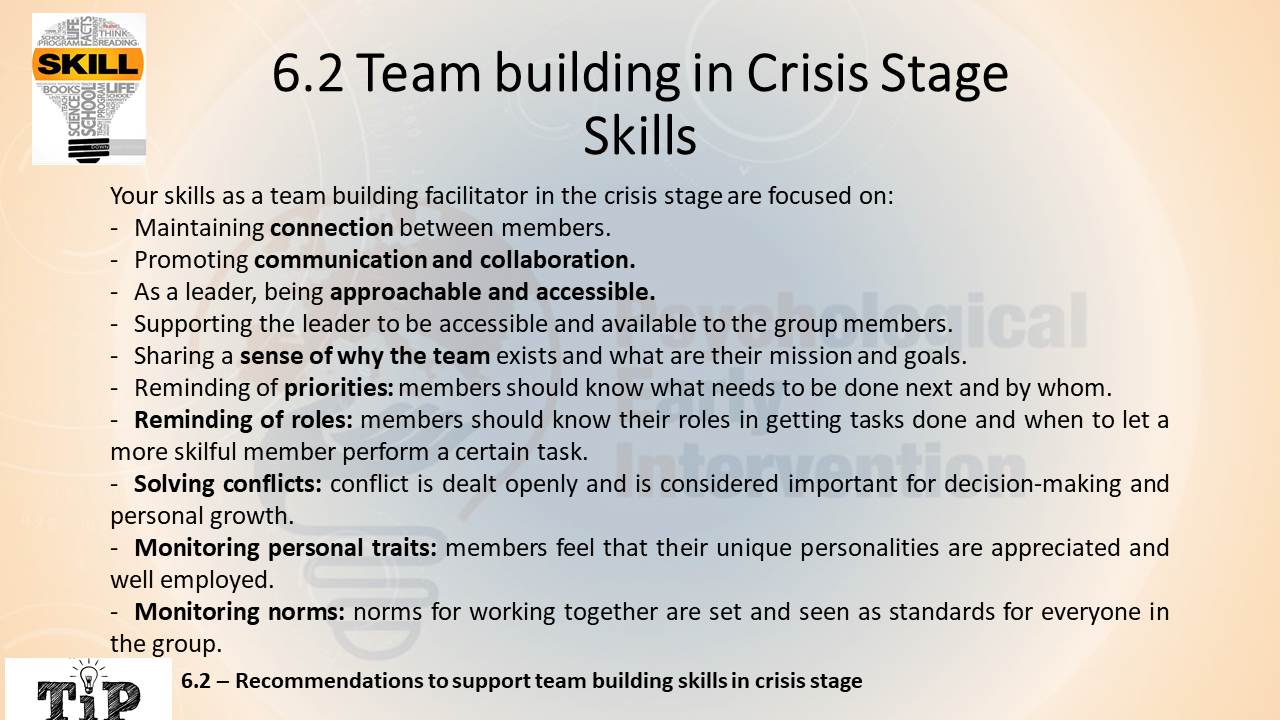
Tip 6.2 Recommendations to support Team Building skills in Crisis stage.pdf
Tip 7. 2 Individual Approaches for Stress Prevention Management.pdf
TPGSZD~R.PDF
CONCLUSION
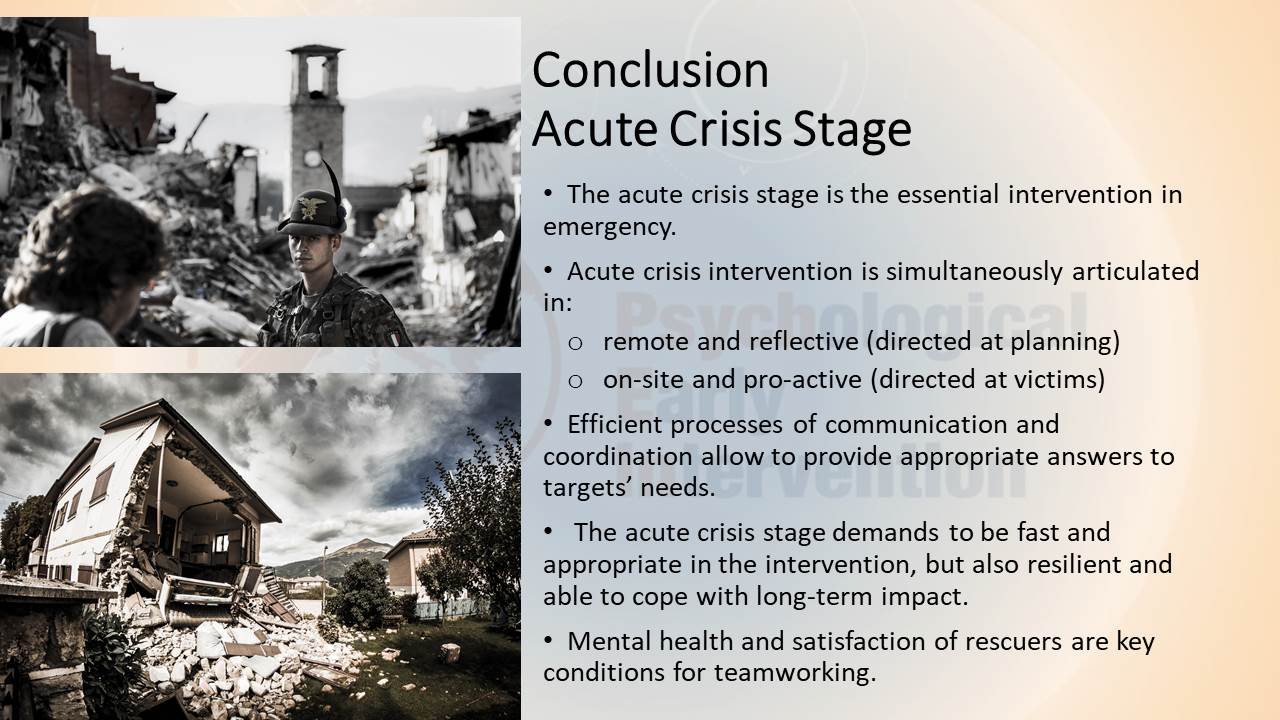
The acute crisis stage is the essential intervention in emergency. Acute crisis intervention is simultaneously articulated in: - remote and reflective (directed at planning) - on-site and pro-active (directed at victims) Efficient processes of communication and coordination allow to provide appropriate answers to targets’ needs. The acute crisis stage demands to be fast and appropriate in the intervention, but also resilient and able to cope with long-term impact. Mental health and satisfaction of rescuers are key conditions for teamworking.